
Chargers and Power Adapters Guide for the UK
As our collection of devices grows, from smartphones and tablets to laptops and wearables, the humble charger has become an essential piece of technology. Yet, choosing the right one can be surprisingly complex. A poor choice can lead to frustratingly slow charging, or worse, pose a genuine safety risk. This guide will help you navigate the market, avoid common pitfalls and find a reliable power solution for your needs.
The 3 Costly Pitfalls to Avoid When Buying a Charger
Before you purchase, be aware of these common issues that can lead to wasted money and potential hazards:
- The "Universal Fast Charging" Myth: Many products claim to offer fast charging, but this term is often used loosely. True fast charging depends on specific protocols like Power Delivery (PD) or Programmable Power Supply (PPS). If a charger doesn't support the protocol your device uses, you will be left with speeds no better than an old, standard plug.
- The Uncertified Safety Gamble: In the UK, all electronics must meet certain safety standards. A charger without a UKCA mark may lack crucial safety features like over-voltage, short-circuit and overheating protection. These uncertified units are a significant fire hazard and can cause irreparable damage to your expensive devices.
- The Inefficient and Bulky Brick: Older charger designs are often large, generate excessive heat and are inefficient, wasting energy. This not only makes them inconvenient for travel but the excess heat can also degrade your device's battery health over time.
Core Features to Check Before You Buy
To ensure you get a charger that is safe, efficient and right for your devices, focus on these key parameters.
Power Output (Watts) and Power Delivery (PD)
The most important specification is the power output, measured in watts (W). A smartphone might only need a 20W fast charger, while a laptop could require 65W or more. Look for chargers that support Power Delivery (PD), a modern charging standard that uses a USB-C connection to negotiate the fastest possible speed for your specific device. A PD power adapter ensures your device only draws the power it needs, providing a safe and efficient charge.
GaN (Gallium Nitride) Technology
A GaN charger uses Gallium Nitride instead of traditional silicon. In simple terms, this allows for a much smaller, lighter and more energy-efficient charger that produces less heat. If you are looking for a powerful multi-port charger or a compact travel charger that doesn’t weigh you down, GaN technology is a feature worth seeking out.
Wireless Charging Standards: Qi and MagSafe
For those who prefer a cable-free setup, a wireless charger is an excellent choice. The universal standard is Qi (pronounced "chee"). For Apple users, a MagSafe charger offers the added benefit of magnetic alignment, ensuring a perfect connection and efficient charging every time. Many modern solutions, like a 3-in-1 charging station, combine these technologies to power a phone, watch and earbuds all at once.
Our Top Product Recommendations
We have filtered through the options to match different needs with reliable and compliant chargers.
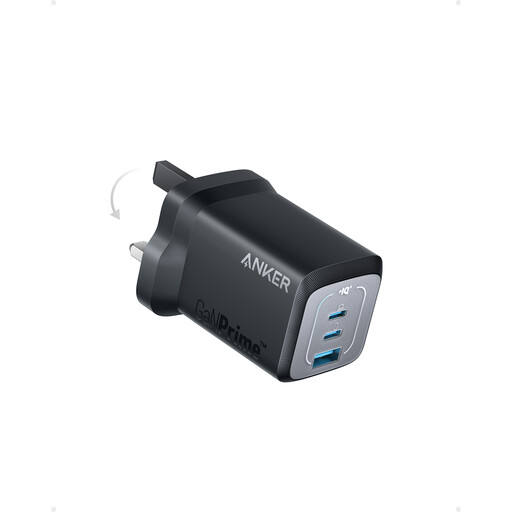
Anker Prime, USB-C 3-Port GaN Charger, 67W Fast Charging, Black
Why This Fits Their Persona: Perfect for the UK professional who carries a laptop, phone and tablet. Its compact GaN design fits easily into a briefcase or backpack, and the 67W output is powerful enough to charge a MacBook Air and an iPhone simultaneously from a single plug socket in a coffee shop or on the train.
This is a certified GaN charger, eliminating the bulky, inefficient brick problem. It clearly specifies its 67W PD output and port capabilities, cutting through the vague "fast charging" marketing myth.
GaN Technology: 51% smaller than a standard 67W charger.
Multi-Port Power: Charges three devices at once with intelligent power distribution.
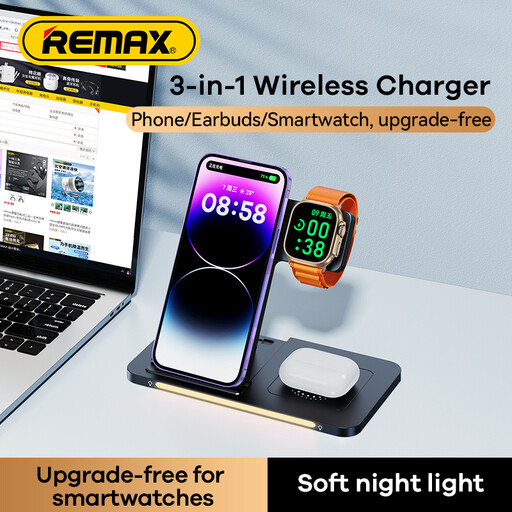
REMAX RP-W70 Minxl Pro Series 3-in-1 Foldable Wireless Charger
Why This Fits Their Persona: Ideal for anyone with an iPhone, Apple Watch and AirPods. It declutters the bedside table or desk by replacing three separate cables with one sleek station. The foldable design makes it a superb travel companion for UK holidays or business trips.
This unit consolidates charging, avoiding the need for multiple bulky plugs. Its smart chip provides multiple safety protections, including low-temperature charging, to prevent overheating and protect battery health.
3-in-1 Convenience: Charges a phone, watch and earbuds simultaneously.
Foldable & Portable: Folds flat for easy packing and storage.
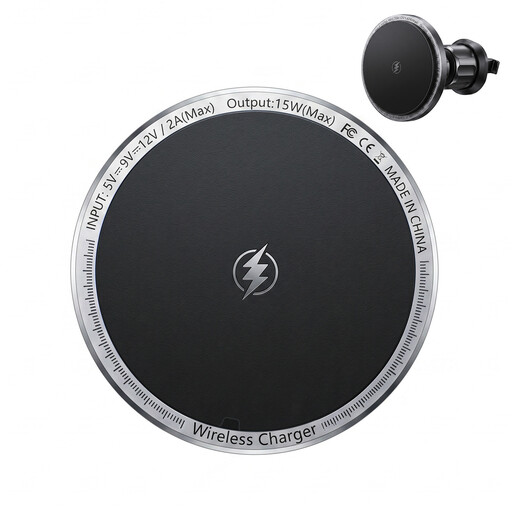
Rexsun 15W Magnetic Wireless Car Charger
Why This Fits Their Persona: For the driver who relies on their phone for navigation and music. This MagSafe-compatible car charger allows for true one-handed mounting, which is safer while driving. The air vent clip keeps the windscreen clear, and 15W wireless charging keeps the battery topped up on long journeys across the UK.
It provides a secure magnetic hold, preventing the phone from falling, which is a common issue with flimsy universal mounts. The integrated metal cooling plate actively dissipates heat, countering the overheating risk of many car chargers.
Magnetic Alignment: Effortless one-handed mounting for MagSafe-compatible iPhones.
Efficient Cooling: Metal backplate helps maintain low temperatures during fast charging.
Looking for More Options?
We have compiled a complete, real-time list of products that fully satisfy these strict selection criteria and UK safety regulations.
Frequently Asked Questions
Can I use a higher wattage charger than my device needs?
Yes, you can. A modern, certified charger with Power Delivery (PD) technology will communicate with your device to supply only the amount of power it can safely handle. For example, using a 65W laptop charger on a 20W smartphone is perfectly safe; the phone will simply draw a maximum of 20W. It will not, however, charge any faster than its own limit.
What is the difference between a USB-C and a USB-A charger?
USB-A is the traditional, rectangular USB port that has been standard for years. It is larger and not reversible. USB-C is the newer, smaller, oval-shaped connector that is reversible, meaning you can plug it in either way up. More importantly, USB-C is the standard for Power Delivery (PD), enabling it to deliver much higher wattage for fast charging laptops, tablets and phones.
How long should a good quality charger last?
A well-made charger from a reputable brand, bearing the necessary UKCA safety certification, should last for several years of regular use. The lifespan can be affected by factors like physical damage to the cable or plug or exposure to moisture. A manufacturer's warranty (e.g., 2 or 3 years) is often a good indicator of the brand's confidence in its product's durability.