
TV Wall Mount Buying Guide 2026: Our Top Recommendations for UK Homes
Choosing a TV wall mount can make a room feel more spacious, improve viewing angles and keep cables organised. However, a bracket that looks suitable on a product page may still be incompatible with your television or wall.
The important details are usually found in the technical specifications rather than the headline. Before buying a TV wall bracket, check the VESA pattern, television weight, wall type and the amount of movement you actually need.
Common TV wall mount buying pitfalls
1. Matching the screen size but ignoring VESA
A bracket advertised for “32–55 inch TVs” is not automatically suitable for every television in that range. The fixing holes on the rear of the TV must match the bracket’s VESA measurement, such as 200 × 200 mm or 400 × 400 mm.
Measure horizontally and vertically between the centres of the mounting holes. Also check whether the mounting screws, spacers and washers suit the depth of your TV.
2. Treating the maximum load as a target
A mount’s maximum load capacity should exceed the weight of your television, not merely equal it. Remember to account for the television only unless the manufacturer states otherwise; soundbars and accessories may require separate support.
A large bracket may have a higher capacity, but it can also be heavier and more difficult to position. Select a model with a suitable margin while ensuring the wall can support the combined load.
3. Buying movement that the room cannot accommodate
A full-motion TV mount may swivel and extend substantially from the wall, but it needs clearance at the sides and behind the screen. Extension can also place more leverage on the wall fixings.
For a television viewed directly from one sofa, a fixed TV wall mount or tilting TV mount may provide a neater and simpler installation. Full movement is more useful in open-plan rooms, corners or spaces with multiple seating positions.
Core specifications to check before purchase
VESA compatibility
A universal TV bracket should clearly state its supported VESA range. Common patterns include:
- 75 × 75 mm and 100 × 100 mm for smaller screens
- 200 × 200 mm and 300 × 300 mm for many medium televisions
- 400 × 400 mm, 600 × 400 mm or 600 × 600 mm for larger screens
A wide VESA range does not remove the need to measure your TV. Check the product listing and your television’s manual before ordering.
Wall type and fixing method
Most TV wall mounts in this selection are intended for wood studs or solid concrete and brick walls. Do not install a heavy television bracket into plasterboard alone unless an appropriate structural fixing system has been specified and the wall has been assessed for the load.
UK renters should obtain the landlord’s permission before drilling. For stud walls, locate the centre of the studs rather than relying on plasterboard fixings. Use a spirit level and, for larger screens, ask another adult to assist with lifting and hanging the television.
Profile, tilt, swivel and extension
A low-profile TV bracket can sit only a few centimetres from the wall, creating a clean appearance. Measure the depth of the television, including cable plugs, because a very shallow mount may leave limited room for connections.
Tilting can help when the television is mounted above eye level or opposite a bright window. Swivel and extension are useful for corner installations, but moving brackets need sufficient side clearance and careful cable routing.
Our TV wall mount recommendations for different buyers
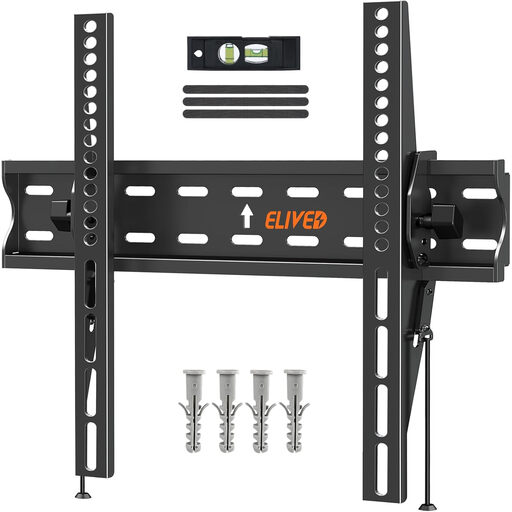
Ultra Slim TV Mount for Most of 26-60 inch Flat or Curved LCD, LED, OLED TVs
Why This Fits Their Persona: Suitable for a first living-room, bedroom or home-office installation where a simple, close-to-wall design is preferred.
The listing specifies screen size, VESA range and load capacity, helping buyers check compatibility before installation rather than relying on screen size alone.
Supports 26–60 inch TVs up to 45 kg, with VESA 75 × 75 mm to 400 × 400 mm, 38 mm wall clearance and 0° to -8° tilt.
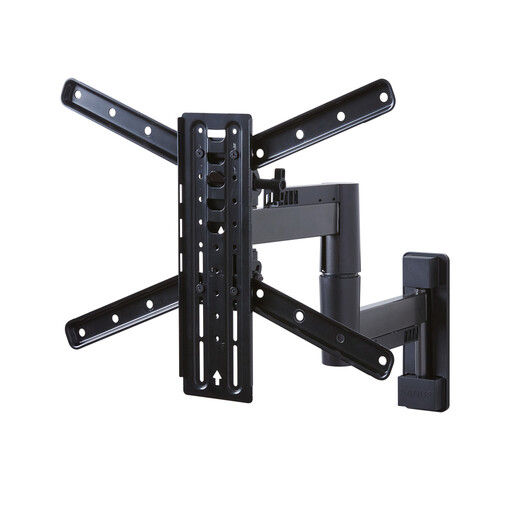
Sanus Vuepoint Medium Full-Motion Mount for 32"-55" TVs
Why This Fits Their Persona: A considered option for home entertainment rooms where viewing position, cable appearance and post-installation alignment matter.
Its stated extension, wall clearance and installation adjustments make the movement range easier to assess before purchase.
Offers tilt, swivel and extension up to 19 inches, plus in-arm cable channels and post-installation levelling.
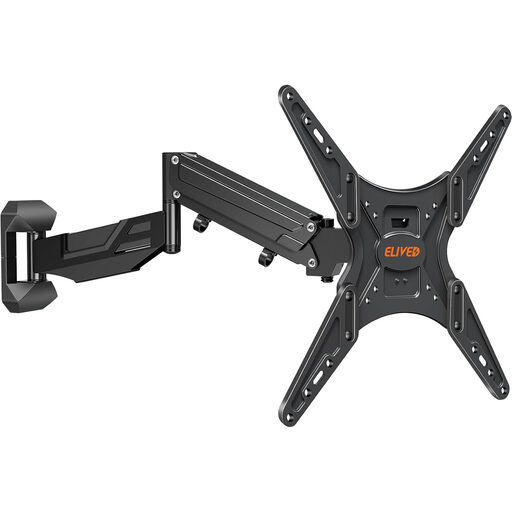
Height Adjustable Gas Spring Arm Full-Motion TV Wall Mount
Why This Fits Their Persona: Designed for rooms where viewers sit at different angles, including corner layouts, offices and multi-seat lounges.
The specified extension, swivel and tilt ranges help buyers judge whether the wall and furniture layout can accommodate the arm.
Fits 23–55 inch flat or curved TVs up to 25 kg, with 515 mm extension, 180° total swivel, tilt adjustment and a 219 mm height range.
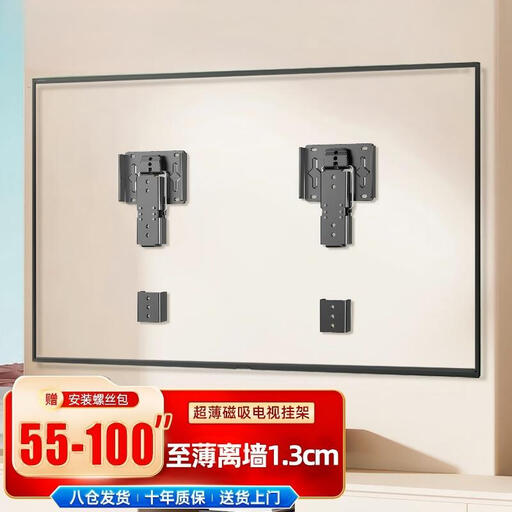
CNTSLNB TV Wall Mount Fixed Bracket for 32-100 Inch TVs
Why This Fits Their Persona: A fixed solution for large televisions in a dedicated lounge, meeting room or office where the screen is viewed from one main position.
It states the supported size range, 60 kg load limit and VESA range, reducing the risk of choosing a small bracket for a large screen.
Supports 32–100 inch TVs, VESA 75 × 75 mm to 600 × 400 mm and up to 60 kg, with a fixed, space-saving format.
Looking for More Options?
We have compiled a complete, real-time list of products that fully satisfy these strict selection criteria and UK safety regulations.
Installation checklist for UK homes
Before mounting your television:
- Confirm the TV’s weight, screen size and VESA pattern against the bracket specification.
- Identify whether the fixing point is a timber stud, brick or concrete wall.
- Check the wall plate, screws and supplied spacers are suitable for the installation surface.
- Measure clearance for cables, ventilation and any swivel movement.
- Use a spirit level before tightening the wall plate.
- Lift larger televisions with two people and confirm that the locking mechanism is engaged.
- Recheck the fixings periodically if the bracket is frequently extended or swivelled.
For a curved television, confirm that the mounting arms and supplied spacers can sit evenly against the rear housing. A TV mount for flat-screen TVs may also fit a curved model, but only where the listed VESA and screen specifications match.
People Also Ask
Is a TV wall mount suitable for plasterboard?
Not usually without appropriate structural support. Many brackets specify installation into wood studs or solid brick and concrete walls only. Plasterboard alone may not safely support the combined weight of a television and mount. If the wall construction is unclear, consult a qualified installer before drilling.
Is a fixed or tilting TV mount better for a bedroom?
A fixed mount keeps the screen close to the wall, while a tilting TV mount can angle the screen down when it is installed higher than normal eye level. Compare the television’s position, viewing height and available cable clearance rather than choosing by appearance alone.
Does a full-motion TV mount need maintenance?
It does not normally have an electricity-running cost, but moving parts and wall fixings should be checked occasionally. Avoid forcing the arm beyond its stated range, keep cables slack enough for movement and tighten fixings only according to the supplied instructions.