
Your Guide to Smart TV Backlights in 2026
Watching a film or getting lost in a new game is about more than just what’s on the screen. The right atmosphere can transform your living room into a cinema or a gaming arena. If you're looking to elevate your home entertainment, smart TV backlights offer a dynamic way to create a more immersive experience. But with so many options, from simple strips to complex syncing systems, choosing the right one can be confusing.
This guide is designed to help you understand the key features to look for. We'll walk you through the different types of immersive tv lighting and provide some practical advice to help you find a solution that fits your setup and budget.
How to Choose the Right Smart TV Backlights
Before you add anything to your basket, consider these key points. Getting the fundamentals right will ensure you're happy with your purchase for years to come.
1. Syncing Technology: Camera vs. HDMI Sync Box
The magic of modern TV backlights is their ability to match the colours on your screen. This is typically achieved in one of two ways:
- Camera-Based Systems: A small camera is mounted on top of or below your TV. It "watches" the screen and tells the lights which colours to display. While effective, this can mean an extra device in your line of sight and potential for slight delays or colour inaccuracies depending on ambient room light.
- HDMI Sync Box Systems: These systems, such as a WIZ sync box kit, sit between your media source (like a game console, streaming stick or Blu-ray player) and your TV. They read the video signal directly before it reaches the screen, resulting in highly accurate, real-time colour matching with no camera required. This method provides a cleaner setup and is often preferred for high-fidelity home cinema systems.
2. Form Factor: LED Strips vs. Light Bars
The physical format of the lights also plays a significant role in the final effect.
- Smart LED Light Strips: These are flexible, adhesive-backed strips that you attach directly to the back of your television. They are excellent for creating a uniform halo of light, known as tv bias lighting, which can help reduce eye strain and improve perceived on-screen contrast. Look for RGBIC ambient lighting strips, which can display multiple colours at once for more dynamic, flowing effects.
- LED Light Bars: These are freestanding units that can be placed on your media unit, on shelves or mounted to the wall beside your screen. LED light bars for gaming are particularly popular as they can be positioned to cast wider pools of light, extending the on-screen action across the entire wall.
3. Smart Control and Integration
The "smart" in smart lighting comes from its connectivity. Most modern systems connect to your home Wi-Fi and can be controlled via a smartphone app. This allows you to change colours, adjust brightness and set schedules. For ultimate convenience, check for compatibility with voice assistants. Being able to use voice controlled colour changing lights with Alexa or Google Assistant means you can change the mood without ever reaching for your phone or the remote. Brands like Tapo smart lights often offer direct Wi-Fi connectivity without the need for an extra hub.
Our Top Recommendations for Smart TV Backlights in 2026
Here are a few options that cater to different needs, from versatile accent lighting to fully synchronised home cinema setups.
For Versatile Accent Lighting: WIZ Smart Light Bars
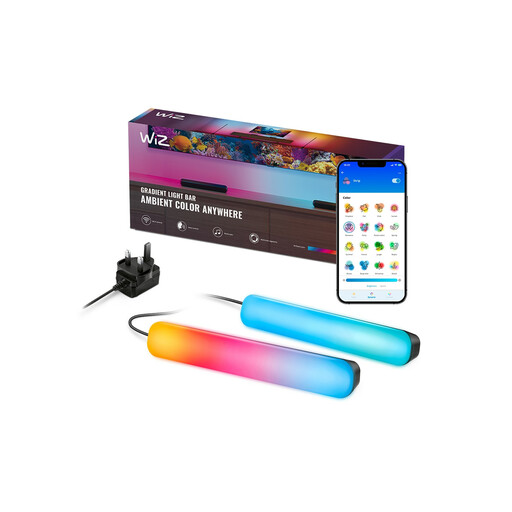
WIZ Smart Light Bars LED Black 30cm 2pcs
- Why It Stands Out: These light bars offer exceptional flexibility. You can lay them flat, stand them upright or mount them behind your screen to wash your walls with colour. Their gradient design allows them to project multiple colours at once, creating a vibrant and artistic effect. They can be set to preset scenes like 'Ocean' or 'Fireplace' for general ambiance or synced with on-screen content when paired with a compatible sync box.
- Pros:
- Can be placed almost anywhere for creative lighting effects.
- Projects smooth, multi-colour gradients.
- Can be controlled via the WiZ app and voice assistants.
- Who is it for: Those who want dynamic ambient lighting that isn't permanently fixed to the TV, making it ideal for renters, gamers or anyone wanting to light up more than just the area behind the screen.
For a Straightforward DIY Setup: Tapo Smart LED Light Strip
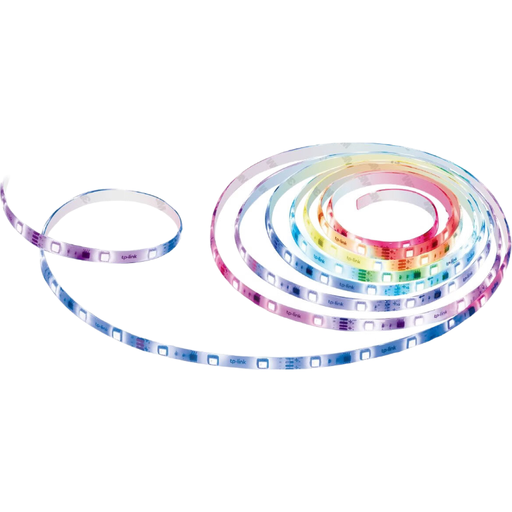
tapo L920-5 Smart Multicolor LED Light Strip (5m)
- Why It Stands Out: This 5-metre smart led light strip from Tapo is a user-friendly and effective solution. It connects directly to your Wi-Fi, so no hub is required. Its RGBIC technology allows for control over 50 separate colour zones, enabling you to create complex scenes and flowing animations. The strip is protected by a durable PU coating and can be trimmed to the exact length you need for your TV or desk setup.
- Pros:
- Connects directly to Wi-Fi without a hub.
- 50 customisable colour zones for dynamic effects.
- Can be trimmed to size for a perfect fit.
- Voice control with Alexa and Google Assistant.
- Who is it for: Anyone looking for a simple, cost-effective and highly customisable way to add ambient lighting to their TV, gaming monitor or other areas of a room.
For the Ultimate Immersive Experience: WIZ TV & Sync Box Kit
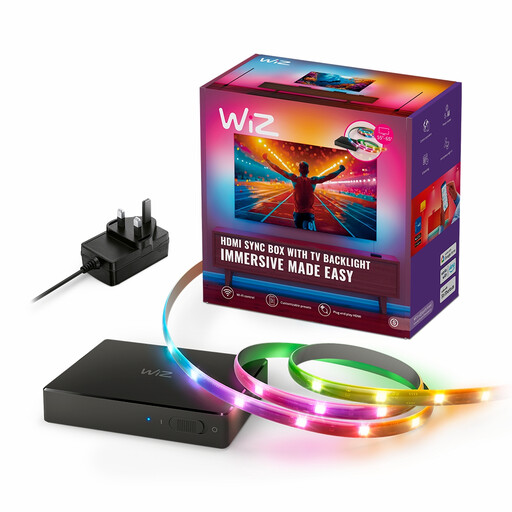
WIZ Smart Lighting LED Strip RGBIC for 55"-65" TVs & Sync Box Kit
- Why It Stands Out: This is an all-in-one package designed for a premium home cinema experience. The kit includes an RGBIC LED strip sized for 55"-65" TVs and the crucial WIZ sync box. By reading the signal from any HDMI 2.0 device, it mirrors the on-screen colours with remarkable accuracy and speed. It supports modern video standards, including 4K at 60 Hz, HDR10+ and Dolby Vision, ensuring it won't compromise your picture quality.
- Pros:
- Camera-free syncing via HDMI for superior accuracy.
- Full support for 4K HDR and Dolby Vision passthrough.
- Creates a seamless, room-wide effect by syncing with other WiZ lights.
- Clean installation with no camera in sight.
- Who is it for: Home entertainment enthusiasts who prioritise performance and want the most accurate and responsive immersive tv lighting to complement their high-quality 4K television.
Looking for More Options?
While these are some of our top recommendations, the world of smart lighting is vast. If you're looking for different lengths, styles or functionalities, there are many other solutions available.
Explore our full range of strip lighting bulbs to find the perfect fit for your home.
Frequently Asked Questions
What is TV bias lighting and does it help?
TV bias lighting is a soft, indirect light placed behind a screen. Its primary purpose is to reduce the visual strain on your eyes caused by looking at a bright screen in a dark room. By providing a gentle glow, it reduces the harsh contrast between the screen and the surrounding wall, which can make for a more comfortable viewing experience, especially during long film or gaming sessions. It can also improve the perceived black levels and contrast of your TV's picture.
What is the difference between RGB and RGBIC?
The main difference lies in how the colours are controlled. A standard RGB light strip can only display one colour across its entire length at any given time. You can change the colour, but the whole strip will be red, green or blue. RGBIC (Red, Green, Blue with Independent Control) strips contain a special chip that allows you to control individual segments of the strip. This means a single strip can display multiple colours simultaneously, creating flowing gradients, chasing effects and much more dynamic scenes.
Do I need a hub for smart TV backlights?
It depends on the product. Some systems, like many from the Tapo smart lights range, are designed to connect directly to your home's Wi-Fi network, so you don't need any additional hardware. Others, particularly those that are part of a larger smart home ecosystem, may require a central hub or a specific bridge to communicate and unlock their full features, such as screen syncing. Always check the product specifications to see if a hub is required.