
How to Choose a Portable Car Tyre Inflator Without Wasting Money
A portable car tyre inflator can be useful for routine pressure checks, seasonal adjustments, long journeys and roadside top-ups. However, product listings often focus on eye-catching figures rather than the details that affect everyday use.
A high maximum pressure does not automatically mean faster inflation. A cordless tyre inflator may also become inconvenient if its battery is flat when you need it. Before buying, UK drivers should compare inflation speed, power source, pressure controls and compatibility with their vehicle.
Common buying traps to avoid
1. Treating the maximum PSI as a performance rating
A listing showing 150 PSI or 160 PSI describes the unit’s upper pressure range, not the pressure your car tyre should use. Most drivers should follow the recommended cold-tyre pressure shown on the vehicle’s tyre placard, handbook or fuel-filler flap.
Maximum PSI is more useful for checking whether the pump can handle bicycles, sports balls or different vehicle types. It is not a reliable way to compare how quickly two pumps inflate a standard car tyre.
2. Ignoring airflow and inflation conditions
Airflow, usually shown in L/min, gives a more practical indication of how quickly a pump may work. Actual performance can vary according to tyre size, starting pressure, temperature, valve connection and whether the unit needs cooling breaks.
A small electric tyre pump may be suitable for topping up one or two tyres, while a larger portable air compressor may be more appropriate for several tyres in succession. Check the manufacturer’s stated operating instructions rather than assuming that a compact design can run continuously.
3. Buying extra features while overlooking essentials
LED lights, USB power-bank functions and multiple inflation modes can be useful, but they do not replace a suitable hose, compatible valve connector or readable pressure display. Also check whether a Presta adapter is included if you intend to inflate road-bike tyres. Most car tyres use Schrader valves.
For a wired car tyre pump, confirm the cable length and whether it connects to a 12V DC socket. For a rechargeable air compressor, check charging time, battery capacity and whether the battery can be replaced or topped up in the car.
Key specifications to compare
Maximum pressure, airflow and duty cycle
Look for three related figures:
- Maximum pressure: 150 PSI or 160 PSI is more than enough for many cars, motorcycles, bicycles and balls, but does not indicate recommended tyre pressure.
- Airflow: A higher L/min figure can support quicker top-ups, although the stated test conditions may differ between products.
- Duty cycle: This explains how long the pump can operate before cooling. It is particularly important for SUVs, multiple tyres and repeated roadside use.
Large trucks, trailers, RVs and off-road vehicles may require equipment outside the stated compatibility of a compact inflator. Always verify the product’s vehicle limitations before purchase.
Battery and power source
A cordless tyre inflator is convenient for a boot, glovebox, motorcycle storage area or cycling bag. Battery capacity is usually listed in mAh, but capacity alone does not guarantee a specific number of inflations. Motor power, tyre size and pressure changes all affect runtime.
A wired 12V model avoids dependence on an internal battery, but the vehicle engine may need to be running during use to reduce the risk of draining the battery. Follow the pump’s instructions and check the vehicle socket’s current rating where relevant.
Digital pressure gauge and auto shut-off
A digital tyre pressure gauge makes it easier to select PSI, bar or kPa and read the target in poor light. An auto shut-off tyre pump stops when the preset value is reached, helping reduce the risk of overinflation. It remains important to attach the hose securely and verify the recommended pressure before starting.
For regular use, look for clear controls, a firm valve connection and a display that can be read from a comfortable position. A built-in light may assist with roadside inflation, but it should be considered an additional convenience rather than a substitute for warning lights, reflective clothing or a safe stopping place.
Our Top Recommendations by user profile

AstroAI Tire Inflator L7S Portable Air Compressor
Why This Fits Their Persona: At 460g, this compact rechargeable pump suits drivers who want a small emergency roadside air pump for a boot, backpack or bike rack.
Its preset function, auto-off operation and four pressure units reduce reliance on guesswork when topping up a tyre.
150 PSI maximum pressure, 17L/min airflow, 4000mAh battery, LED modes and USB-C input/output.

GOOLOO GT160 Portable Air Compressor
Why This Fits Their Persona: Its larger battery and higher airflow suit drivers who want cordless convenience for cars, motorcycles, bicycles and sports equipment.
The 7500mAh battery provides a stated 45 minutes of wireless continuous inflation, while auto shut-off helps control the selected pressure.
160 PSI maximum pressure, 35L/min airflow, preset vehicle modes, digital display and power-bank function.
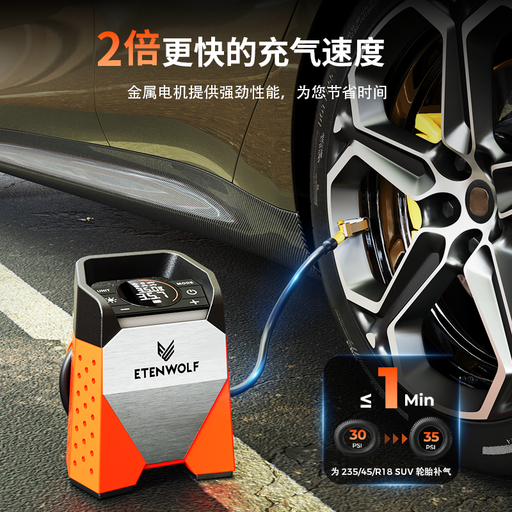
ETENWOLF ZEPHYR S3 Tyre Inflator
Why This Fits Their Persona: The 1.47kg format and stated 12V power specification make it suitable for drivers who prioritise repeated vehicle top-ups over minimum weight.
Its instructions specify a digital target-pressure setting and automatic stop, rather than requiring continuous manual monitoring.
160 PSI maximum operating pressure, 1.25 CFM airflow, digital interface and included Schrader, Presta and needle accessories.
Looking for More Options?
We have compiled a complete, real-time list of products that fully satisfy these strict selection criteria and UK safety regulations.
Practical setup and safety checks
- Check the recommended cold-tyre pressure before switching on the pump.
- Park safely, apply the handbrake and keep away from moving traffic where possible.
- Inspect the tyre for visible damage. An inflator is for restoring pressure, not repairing a puncture.
- Attach the connector firmly to prevent air leakage and select the correct pressure unit.
- Allow the compressor to cool between runs if required by the manual.
- Replace the valve cap after inflation and store the device dry and charged.
Frequently asked questions
Is a portable car tyre inflator worth keeping in a UK car?
It can be useful for correcting gradual pressure loss or making a temporary top-up before reaching a garage. It should not replace regular tyre inspections, a spare-wheel plan or roadside assistance. If a tyre loses pressure repeatedly, arrange a professional inspection.
How long does a rechargeable air compressor last?
Battery runtime depends on tyre size, starting pressure, ambient temperature and the number of tyres inflated. Charge the unit before long journeys and periodically check that it still holds charge. Models with USB-C charging or a 12V backup connection may offer more flexibility.
Can a car tyre pump inflate motorcycle and bicycle tyres?
Many models include modes or nozzles for motorcycles, bicycles and balls, but valve compatibility differs. Schrader valves are common on cars and some bicycles, while Presta valves generally need a suitable adapter. Check the included accessories and pressure range before ordering.