
Choosing the Right Plasterboard Fixings: Our Top Recommendations for 2026
By Joybuy Product Recommendation Officer | Published on 2026-06-07
Hanging a new shelf, a heavy mirror or even just a picture frame can feel like a gamble when you're dealing with plasterboard walls. That hollow sound behind the drill is a familiar source of anxiety for many UK homeowners and tradespeople alike. Using the wrong fixing can lead to a wobbly installation at best, or a costly accident at worst.
This guide is designed to cut through the confusion. As a Product Recommendation Officer, my role is to help you identify the right tools for the job. Here, we will explore the different types of plasterboard fixings available, what to consider before you buy and present some reliable options for your next project.
A Practical Guide to Selecting Plasterboard Fixings
Choosing the correct hollow wall fixings doesn't have to be complicated. By focusing on a few key factors, you can ensure a secure and lasting result.
1. Match the Fixing to the Weight
The single most important consideration is the weight of the item you intend to hang. Fixings are engineered for specific load capacities.
- Lightweight Items (Up to 5kg): For things like smoke alarms, small picture frames and curtain tie-backs, standard wall plugs for plasterboard or simple self-drill fixings are usually sufficient.
- Medium-Weight Items (5kg to 20kg): This category includes larger mirrors, small shelves and curtain rails. You will need more robust options, such as expanding plastic anchors or larger self-drill fixings.
- Heavyweight Items (Over 20kg): For kitchen cabinets, large televisions and substantial shelving units, you must use heavy duty plasterboard fixings. These are typically expanding metal or plastic anchors that spread the load across a wider area inside the wall cavity.
Always check the packaging for the manufacturer's stated maximum load. It is wise to choose a fixing with a capacity that comfortably exceeds the weight of your item.
2. Understand the Different Fixing Types
There are several common types of plasterboard fixings, each with a unique mechanism and ideal use case.
- Self-Drill Plasterboard Fixings: These are often made from nylon or zinc and feature a coarse, sharp thread that allows them to be screwed directly into the plasterboard without a pilot hole. They are excellent for speed and convenience on light to medium-duty tasks.
- Expanding Plastic Anchors: When you tighten the screw, these fixings have 'wings' or a barrel that expands behind the plasterboard, creating a secure anchor. They offer greater holding power than simple plugs and are a versatile choice for many applications.
- Spring Toggles: These metal fixings feature spring-loaded wings that open up inside the wall cavity. They are a classic solution for hanging medium to heavy loads from plasterboard ceilings and walls.
3. Consider the Installation
Some fixings, like the self drill plasterboard fixings, require nothing more than a screwdriver. Others need a specific size of drill bit to create a pilot hole. Before starting your project, confirm what tools are required to avoid any delays. A clean, correctly sized hole is crucial for any fixing to perform as intended.
Our Top Recommendations for Plasterboard Fixings in 2026
Based on their features, applications and user feedback, here are our recommendations to help you find a reliable solution for your plasterboard walls.
For Heavy-Duty Applications: PLASPLUGS HCF110 Heavy-Duty Plasterboard Fixings
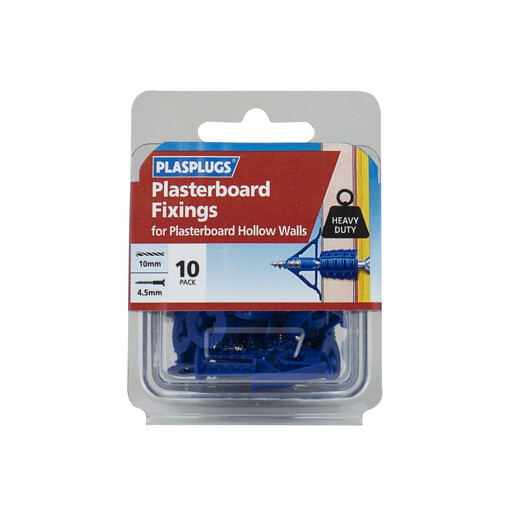
Why It Stands Out: The PLASPLUGS HCF110 is engineered for demanding tasks. Its standout feature is the expanding barrel design combined with multi-thread technology. As you tighten the screw, the fixing contracts in length and expands in width within the wall cavity, creating an exceptionally strong grip that distributes weight effectively. This makes it an excellent choice for fixings for hanging shelves on plasterboard, mirrors and other substantial items.
Pros:
- Provides superior holding power for medium to heavyweight items.
- Anti-rotate ribs prevent the fixing from spinning during installation.
- Requires a standard 10mm drilled hole and is easy to install.
- Suitable for both indoor and outdoor use on hollow walls.
Who is it for? This is for the DIY enthusiast or professional who needs a high-strength, reliable fixing for items like shelving units, wooden battens or wall-mounted lights where failure is not an option.
For Quick and Easy Installations: RAWLPLUG Nylon Self-Drill Plasterboard Fixing
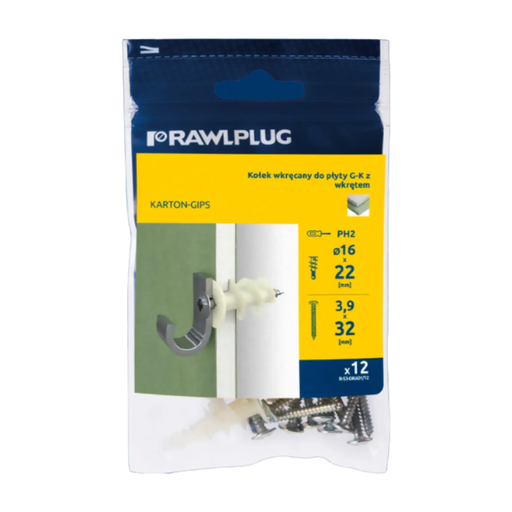
Why It Stands Out: When speed and simplicity are paramount, these Rawlplug plasterboard fixings are a go-to solution. Their key advantage is the self-drilling design—you don't need a drill. Simply use a screwdriver to pierce the plasterboard and drive the fixing home until it is flush. The nylon construction also provides insulation against accidental contact with electrical wiring.
Pros:
- No drilling required, making installation incredibly fast and clean.
- Achieves a flush finish for a neat appearance.
- The screw and fixture can be removed and re-used, which is handy for decorating.
- Nylon body insulates against electrical contact.
Who is it for? Ideal for tradespeople who value efficiency and for DIYers who want a straightforward, tool-minimal solution for hanging light to medium-weight objects like picture frames, clocks and lightweight fixtures.
For Everyday Light-Duty Tasks: PLASPLUGS CF 104 Standard Plasterboard Fixings
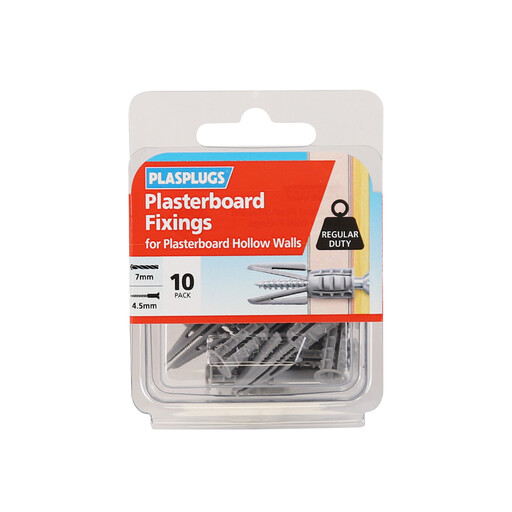
Why It Stands Out: Sometimes, you just need a simple, dependable fixing for a lightweight job. The Plasplugs CF 104 is a classic, no-fuss wall plug for plasterboard. It’s designed for general use and provides a secure anchor for everyday items. After drilling a 7mm hole, the plug is inserted and expands as the screw is driven in.
Pros:
- Easy to use and install with a standard drill bit.
- Cost-effective solution for multiple light-duty applications.
- Reliable for common household items like smoke alarms and curtain tie-backs.
- Provides a much stronger hold than trying to screw directly into plasterboard.
Who is it for? Perfect for any homeowner's toolkit. These are the essential fixings you'll reach for when hanging lightweight decorations, securing cables or mounting small household accessories.
Exploring Other Options?
If you have your fixings sorted but need the right screws to complete the job, or if you're looking for different types of fasteners, we have a wider selection available.
️ Explore our full range of plasterboard screws and fixings to find the perfect match for your project.
Frequently Asked Questions about Plasterboard Fixings
Can you screw directly into plasterboard?
No, it is not recommended. Plasterboard is a soft material made of gypsum pressed between two sheets of paper. A screw driven directly into it will not have enough material to grip and will easily pull out under even a very light load. You should always use appropriate plasterboard fixings to provide a secure anchor point.
What are the strongest types of plasterboard fixings?
For securing very heavy items, heavy duty plasterboard fixings like expanding metal anchors (such as spring toggles or hollow wall anchors) are generally considered among the strongest. These work by spreading the load over a large surface area behind the board, significantly increasing their holding capacity compared to standard plastic plugs.
How much weight can standard wall plugs for plasterboard hold?
The load capacity varies significantly depending on the specific design and size of the fixing, as well as the thickness and condition of the plasterboard. A standard plastic plug might hold up to 5kg, whereas a heavy-duty fixing can potentially hold over 25kg. Always refer to the manufacturer's specifications printed on the packaging for accurate load ratings.