
Industrial Markers Buying Guide: Top Recommendations
As a tradesperson, you know the frustration of a marking line that fades, smudges or simply won’t show up on a dusty or oily surface. A standard office marker just doesn't hold up on a construction site or in a fabrication workshop. Whether you're a builder, metalworker, carpenter or engineer, you need a reliable tool that leaves a clear, durable mark every time. This guide is designed to help you navigate the options and find the right industrial markers for your specific job, ensuring your measurements and cut lines stay put from start to finish.
How to Choose the Right Industrial Marker for Your Trade
Selecting the correct marking tool can save you time and prevent costly errors. Before you make a purchase, consider these key factors to ensure you get a marker that meets the demands of your work environment.
1. Match the Marker to the Material and Environment
The most important consideration is the surface you'll be marking. Different markers are formulated for different materials.
- Paint Markers: These typically use an oil-based, opaque paint that is ideal for non-porous surfaces like metal, plastic, glass and rubber. Paint markers are often the go-to choice for markers for metal because their vibrant, thick pigment stands out and adheres well, even on dark or slightly oily surfaces. Many are also formulated as waterproof markers, making them suitable for outdoor use.
- Permanent Markers: These use a dye-based ink that soaks into porous surfaces like wood, cardboard and concrete. While versatile, standard permanent markers may not be as durable as paint markers on smooth, non-porous industrial materials. For site work, look for heavy duty markers designed with more robust ink and tips.
2. Consider Accessibility and Precision
How and where you need to make your mark is just as important as what you are marking on.
- Deep Hole Markers: When you need to mark through a bracket, a drilled hole or in a tight recess, a standard marker won't reach. A deep hole marker, also known as a long nib marker, features an extended, narrow tip designed specifically for these tasks. These are indispensable trade markers for joiners, electricians and installers.
- Tip Versatility: For general use, a twin-tipped marker can offer great value, providing both a fine point for detailed layouts and a broader tip for more visible lines.
Top Industrial Marker Recommendations
Here are our recommendations for reliable and effective industrial markers that are well-suited for a range of professional and project-based tasks.
Markal Paint-Riter Valve Action Paint Marker 24 Pack
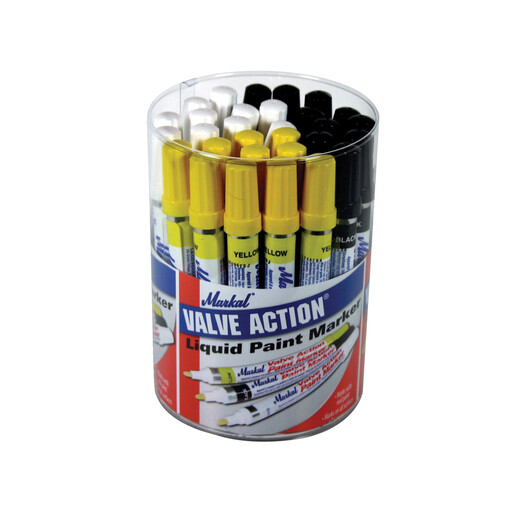
Why It Stands Out: This pack provides a versatile solution for professionals who work with a variety of materials. The key feature is the valve-action mechanism, which gives you precise control over the paint flow, preventing blobs and ensuring a clean line. The weather-resistant paint is formulated for longevity, making it a dependable choice for both indoor and outdoor construction markers.
Pros:
- Precise Paint Flow: The valve-action tip allows for controlled, consistent application.
- High Visibility: The pack includes yellow, white and black markers, ensuring your marks are visible on both light and dark surfaces.
- Durable and Weather-Resistant: The paint is designed to resist fading and chipping in tough conditions.
- Quick-Drying Formula: The permanent paint dries quickly to minimise smudging.
Who is it for? This set is ideal for fabricators, welders and site workers who require highly visible, long-lasting marks on diverse materials like metal, wood and plastic.
Hultafors Deep-Hole Marker Black
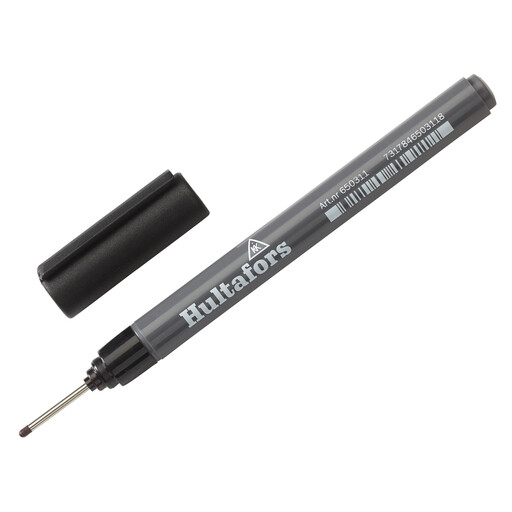
Why It Stands Out: The Hultafors Deep-Hole Marker solves a common problem for many trades: marking in places a standard pen can't reach. Its specialised long nib marker design allows for accurate marking through drill holes, inside fittings and in other confined spaces. The durable construction ensures it can handle the rigours of a busy work site.
Pros:
- Deep-Hole Access: Specifically designed to mark in hard-to-reach areas.
- Clear Markings: The bold black ink provides excellent visibility on most common construction materials.
- Durable Build: Made from high-quality materials to withstand tough job site environments.
- Ergonomic Grip: Designed for comfortable and steady use during prolonged tasks.
Who is it for? An essential tool for carpenters, joiners, electricians and plumbers who frequently need to transfer marks for drilling or cutting in tight spots.
Pentel Twin Tipped Permanent Marker Black
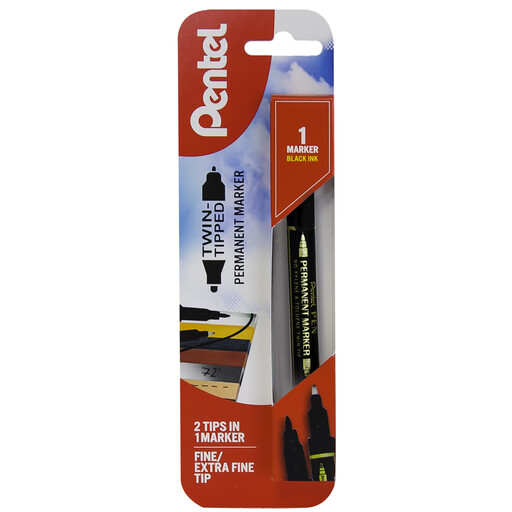
Why It Stands Out: This marker offers excellent versatility by combining two distinct tip sizes in one pen. With a 3.5mm medium bullet tip on one end and a 0.6mm ultra-fine nib on the other, it adapts to a wide variety of tasks, from making bold, clear labels to adding fine, precise details to a layout.
Pros:
- Two Markers in One: A medium and an ultra-fine tip provide flexibility for different applications.
- Low-Odour Ink: The permanent ink is more pleasant to use in enclosed spaces compared to high-odour industrial markers.
- Multi-Surface Use: Suitable for marking on CDs, plastic, vinyl, glass, metal and cardboard.
- Convenient Design: A single tool for both broad marking and detailed work.
Who is it for? This is a great all-rounder for engineers, workshop technicians and serious DIY enthusiasts who need a reliable marker for labelling, organising and detailed project work on smoother surfaces.
Looking for Other Options?
While these recommendations cover many professional needs, your project might require something different. If you're looking for a general-purpose marker for everyday office or workshop tasks, you may find what you need in a more standard format.
Explore our wider selection of black felt tip pens for more choices.
Frequently Asked Questions About Industrial Markers
What is the difference between a paint marker and a permanent marker? The main difference is the marking substance. A paint marker uses oil-based or water-based liquid paint, which creates an opaque layer on top of a surface. This makes it excellent for non-porous materials like metal and plastic. A permanent marker uses a dye-based ink that soaks into porous surfaces like wood or cardboard. For industrial use on smooth surfaces, paint markers generally offer better durability and visibility.
Can I use industrial markers on oily or wet surfaces? Some specialised paint markers are formulated to cut through thin layers of oil or water to leave a permanent mark. Standard ink-based permanent markers will almost certainly fail on these surfaces. Always check the product's specifications to see if it is rated for oily or wet conditions before purchasing.
How do I get the most life out of my trade markers? To maximise the lifespan of your markers, always replace the cap securely after use to prevent the tip from drying out. For paint markers, shake them well before each use to ensure the pigment is properly mixed. It is often recommended to store twin-tipped markers horizontally to ensure even ink flow to both ends.