
How to Choose the Right Drain Unblocker: Our Top Recommendations for 2026
A slow-draining sink or a completely blocked shower is a common household frustration. The standing water, the unpleasant odours and the inconvenience can disrupt your day. While calling a plumber is always an option, a fast and effective DIY drain unblocker can often resolve the issue quickly and affordably.
However, with so many gels, foams and kits on the market, choosing the right clogged drain solution can be confusing. As a Joybuy Product Recommendation Officer, my role is to help you navigate these options. This guide will walk you through what to look for and highlight some dependable products to help you get your water flowing freely again.
A Quick Guide to Selecting a Drain Cleaner
Before you make a purchase, consider these key points to ensure you choose the most effective product for your situation.
1. Identify the Type of Blockage
The cause of the clog often determines the best type of drain cleaner. A kitchen sink unblocker needs to be effective against grease, fat and food particles. In contrast, a shower drain unblocker must be formulated to dissolve the tough combination of hair and soap scum. Identifying the likely culprit will help you select a product with the right chemical action.
2. Understand the Formula: Drain Gel vs. Drain Foam
Drain cleaners typically come in two main forms:
- Drain Gel: These are dense, heavy liquids designed to sink through standing water and reach the blockage directly. A drain gel is an excellent choice for a completely blocked plughole where water is no longer draining.
- Drain Foam: These products usually involve two liquids that, when combined in the drain, create an expanding foam. This drain foam fills the entire pipe, clinging to the walls to remove build-up and eliminate odours. It is ideal for slow-running drains and for general maintenance cleaning.
3. Consider a Mechanical and Chemical Approach
For particularly stubborn blockages, a chemical-only solution might not be enough. Some kits include a physical drain hair remover tool. This allows you to manually loosen or pull out the bulk of the clog before applying a chemical agent to dissolve the rest, offering a powerful two-step approach.
Our Top Recommendations for Drain Unblockers in 2026
Based on their formulation and intended use, here are our recommendations for tackling common drain problems in your home.
Mr Muscle Sink & Drain Unblocker Foam, 500ml
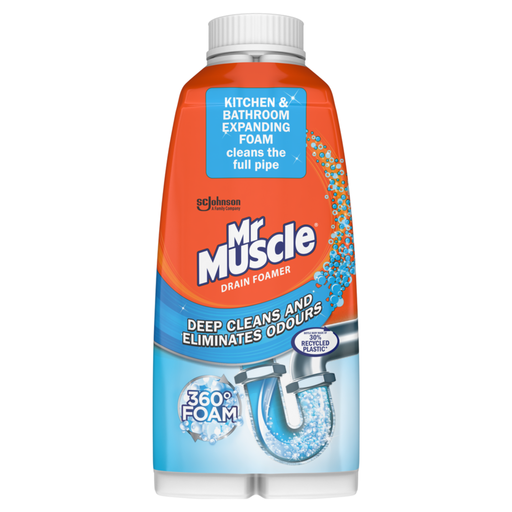
Why It Stands Out: This product uses a dual-liquid formula that activates on contact to create a powerful expanding foam. Instead of just targeting the blockage, the foam coats the entire inner surface of the pipe, helping to remove grime and eliminate the source of unpleasant odours.
Pros:
- Expanding foam reaches the entire pipe wall for a thorough clean.
- Effectively removes foul odours from the drain.
- According to the manufacturer, it is 10 times more effective at removing hair than baking soda and vinegar.
Who is it for? This is an excellent choice for anyone dealing with a slow-running drain and lingering smells from their kitchen or bathroom plughole unblocker. It's particularly useful for maintenance and preventing future build-up.
Mr Muscle Sink & Drain Unblocker Gel, 500ml
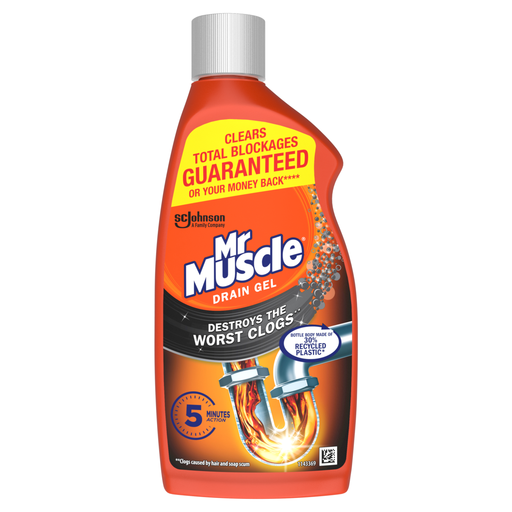
Why It Stands Out: The key feature of this drain gel is its density. It is specifically formulated to be heavier than water, allowing it to sink through a backed-up sink and get straight to work on the clog. It’s a fast-acting solution designed for urgent blockages.
Pros:
- Cuts through standing water to reach the blockage directly.
- Works in as little as 5 minutes for standard clogs.
- The formula is stated to be safe for use on all types of pipes.
Who is it for? This is the product to reach for when you have a completely blocked sink, bath or shower with standing water that won't drain. Its ability to penetrate water makes it a powerful tool for emergency situations.
Cillit Bang 3in1 Drain Unblocker Kit
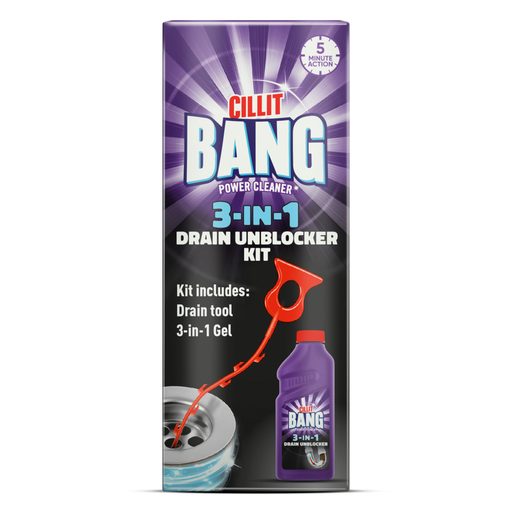
Why It Stands Out: This kit provides a comprehensive clogged drain solution by combining a mechanical tool with a powerful gel. The flexible tool is used first to physically break up and loosen compacted debris like hair and food, after which the fast-acting gel dissolves what remains.
Pros:
- Innovative 3-in-1 kit combines a physical tool and a chemical gel.
- The tool helps to dislodge solid debris for more effective gel action.
- Suitable for tough clogs in both kitchen and bathroom drains.
Who is it for? This kit is ideal for severe, stubborn blockages that may not respond to a liquid-only treatment. If you suspect a compacted mass of hair or food is the cause, this two-step approach is a very practical option.
Haven't Found the Right Fit?
The products above cover some of the most common drain issues, but every home and blockage is different. If you're looking for a different formula or a solution for a specific type of pipe, there are many other options available.
Explore our complete collection of clogged drain remover products to find the perfect match for your needs.
Frequently Asked Questions
How often should I use a drain cleaner?
For preventative maintenance, using a drain cleaner every few weeks to a month can help keep pipes clear and prevent build-up, especially in high-use areas like the shower. For an active blockage, use the product as a one-off treatment. Always read and follow the specific instructions on the product label, as overuse can be unnecessary.
Are chemical drain unblockers safe for all pipes?
Most modern drain unblocker products are formulated to be safe for standard household plumbing, including plastic (PVC) and metal pipes. However, it is always crucial to check the product's packaging for any specific warnings. If you have an older home with lead or brass pipes or if you have a septic system, double-check that the product is compatible.
What is the difference between a drain gel and a drain foam?
A drain gel is a thick, heavy liquid that sinks through water to dissolve a blockage deep in the pipe. A drain foam is lighter and expands to fill the entire pipe, cleaning the walls and removing the grime that causes odours. Gels are generally for clearing deep clogs, while foams are excellent for cleaning and deodorising slow-running drains.