
A Practical Guide to Choosing a Dog Wormer in the UK for 2026
As a dog owner, you know that keeping your companion healthy and happy is a top priority. Part of that responsibility involves managing common health concerns like intestinal worms. Navigating the world of deworming treatments can feel overwhelming, with so many options available. This guide is designed to cut through the clutter, offering clear, practical advice to help you select a suitable dog wormer for your pet's needs.
We will walk through the key factors to consider when buying a dog worming treatment and present some of our top recommendations, helping you make a confident and informed choice for your furry friend.
How to Choose the Right Dewormer for Your Dog
Making the right choice is simpler when you know what to look for. Here are a few key points to consider before you purchase a dewormer for dogs.
1. Identify the Type of Worms Targeted
Different products target different parasites. Some are formulated specifically as a tapeworm treatment for dogs, while others offer broad-spectrum protection against a range of common intestinal worms found in the UK, including roundworms, hookworms and whipworms. For routine treatment, a broad-spectrum wormer is often a practical choice, as it covers multiple potential threats in a single dose. Always check the product's packaging to see which worms it is effective against.
2. Ensure Correct Dosage by Weight and Age
A wormer's effectiveness and safety depend entirely on administering the correct dose for your dog's specific weight and age. A treatment designed for a large adult dog will be unsuitable and potentially unsafe for a small puppy. Before purchasing, you must weigh your dog accurately. Products will clearly state the weight range they are designed for. A dedicated puppy wormer is formulated for the specific needs and sensitivities of a young, growing dog.
3. Understand the Treatment Schedule
The question of how often to worm a dog is a common one. The answer varies depending on age and lifestyle.
- Puppies: Require more frequent worming, often starting from two weeks of age and continuing every few weeks.
- Adult Dogs: Typically require treatment every three months.
- Nursing Bitches: Should be treated at the same time as their puppies.
Always refer to the specific product's instructions for the recommended treatment frequency, as this can vary.
Our Top Recommendations for Dog Wormers in 2026
Here are our recommendations for effective and accessible dog worming tablets available in the UK. We have selected these based on their clear specifications, suitability for different dog sizes and ease of use for at-home treatment.
Beaphar WORMclear Dog for Dogs up to 20kg
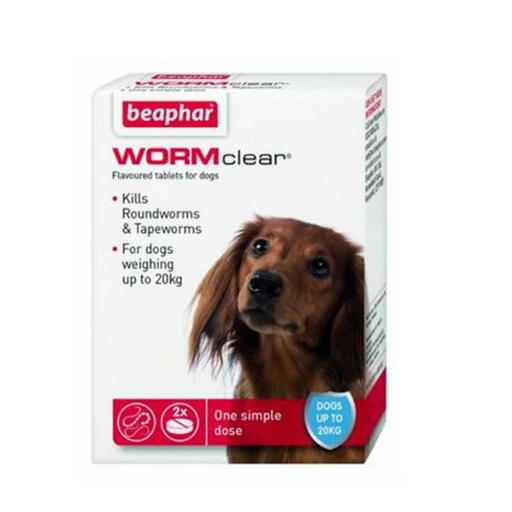
Why It Stands Out: This is a broad-spectrum treatment that is effective against all common intestinal worms found in UK dogs, including tapeworms and roundworms. It contains three active ingredients—praziquantel, pyrantel embonate and febantel—that work together to provide comprehensive protection. The pork-flavoured tablets are designed for easy administration.
Pros:
- Kills all common UK intestinal worms.
- Suitable for puppies from 2 weeks of age (weighing over 3kg).
- Can be given with or without food.
- Safe for use in nursing bitches.
Who is it for? This treatment is ideal for owners of puppies and adult dogs weighing between 3kg and 20kg who are looking for a comprehensive, all-in-one worming solution.
View Beaphar WORMclear for Dogs up to 20kg
Itch Wormer for Extra Large Dogs
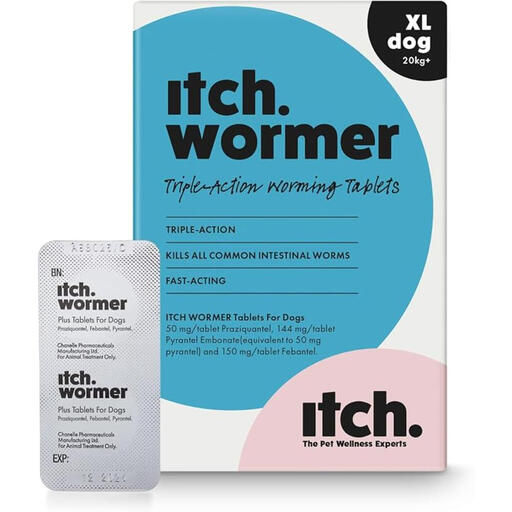
Why It Stands Out: Finding an accurately dosed wormer for very large breeds can be a challenge. This Itch Wormer is specifically formulated for extra-large dogs, with a dosage of one tablet per 50kg of body weight. This precision helps ensure your gentle giant gets the right amount of treatment for effective roundworm treatment for dogs and tapeworm control.
Pros:
- Tailored dosage for extra-large breeds (e.g., Great Dane, Mastiff).
- Broad-spectrum action against common internal parasites.
- Tablets can be given directly or mixed with food.
- Convenient 2-tablet pack for single or short-term use.
Who is it for? This is the go-to option for owners of extra-large dog breeds who need a reliable and precisely dosed deworming product.
View Itch Wormer for Extra Large Dogs
Beaphar Wormer One Dose Small Dogs
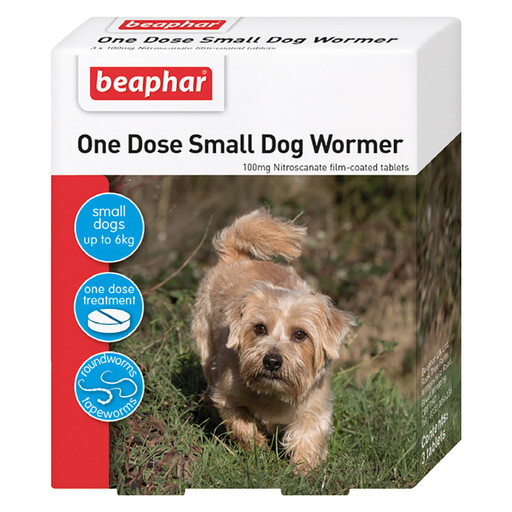
Why It Stands Out: This one-dose wormer is specifically designed for the needs of small dogs and puppies over six months old. As a UK-authorised veterinary medicine, it provides a reliable way to tackle common roundworms and tapeworms. Its key feature is the ease of administration—the tablets are intended to be mixed with a small portion of your dog's food, making it a stress-free experience.
Pros:
- Specially formulated for small dogs weighing up to 6kg.
- Effective one-dose treatment for roundworms and tapeworms.
- Easy to administer by mixing with food.
- Authorised as a UK veterinary medicine.
Who is it for? This is an excellent choice for owners of small breeds like Chihuahuas, Pomeranians and Shih Tzus (over 6 months old) who prefer a treatment that can be discreetly added to their dog's meal.
View Beaphar Wormer One Dose for Small Dogs
Looking for Other Health Support?
Regular deworming is a cornerstone of preventative health, but overall wellness is built on a foundation of good nutrition. If you are also looking to support your dog's general health, skin, coat or joints, you may wish to explore other dietary supplements.
For more options to support your dog's daily well-being, take a look at our wider selection of dog vitamin supplements.
Frequently Asked Questions
How often should I worm my dog?
The frequency depends on age. Puppies under 12 weeks often need worming every 2 weeks. From 12 weeks to 6 months, this is typically reduced to monthly. Adult dogs over 6 months usually require worming every 3 months. However, you should always follow the specific instructions provided with the dog worming treatment you choose.
What are the signs my dog might have worms?
Common signs include weight loss despite a good appetite, a dull or dry coat, increased bottom-scooting, diarrhoea, or vomiting. In some cases, you may see worms in your dog's faeces or around their tail. If you notice any of these signs, it is always a good idea to consult with your vet for advice.
Can I use a dog wormer as a preventative?
Dog worming tablets work by killing worms that are already present in your dog's system. They do not provide long-term immunity. The "preventative" aspect comes from following a regular treatment schedule, which helps to eliminate new worm infestations before they can grow into a serious problem. Regular treatment is the key to keeping your dog protected.