
Our Top Recommendations for the Right Clothes Airer in 2026
With unpredictable weather and rising energy bills, drying laundry indoors has become a standard part of UK household routines. A reliable clothes airer is no longer just a convenience; it's an essential tool for managing laundry efficiently and affordably. However, the market is filled with options, from simple folding frames to advanced heated models.
As a Joybuy Product Recommendation Officer, my role is to help you navigate these choices. This guide cuts through the marketing jargon to offer practical advice, helping you find an indoor drying rack that suits your space, budget and laundry needs.
How to Choose the Right Clothes Airer for Your Home
Selecting the right laundry drying rack involves more than just picking the first one you see. Consider these key factors to ensure your choice is a practical one.
1. Assess Your Space and Capacity
The first step is to measure the area where you plan to use and store your airer. For those in smaller flats or with limited storage, a foldable clothes airer that collapses into a slim profile is ideal. Look for the total drying space, which is usually measured in metres. A single person might only need 10-15 metres, while a family will benefit from an airer offering 20 metres or more. Tiered models offer significant capacity in a small footprint, whereas a winged airer provides a wide area perfect for laying jumpers flat.
2. Standard vs. Heated: Weighing Cost and Speed
Your next decision is whether to opt for a standard or a heated clothes airer.
- Standard Airers: These are the most energy-efficient option, as they use no electricity. They are perfect for everyday use and rely on ambient air circulation. They are often referred to as a traditional clothes horse.
- Heated Airers: An electric clothes airer uses a low-wattage heating element to gently warm the rails, significantly speeding up drying time. This makes them an excellent tumble dryer alternative, especially during damp winter months. While they consume electricity, their running costs are typically just a few pence per hour—a fraction of what a tumble dryer would cost.
3. Check for Durability and Practical Features
Look for airers made from robust materials like powder-coated steel, which resists rust and can support the weight of wet, heavy items like towels and denim. Practical features can make a big difference. Wheels add mobility, allowing you to move a fully loaded rack easily. Non-slip feet protect your floors, and built-in hooks for hangers provide extra, specialised drying space for shirts and blouses.
Our Top Clothes Airer Recommendations for 2026
Based on common household needs for capacity, space-saving design and efficiency, here are some standout options to consider.
JVL Three Tier Foldable Laundry Washing Clothes Drying Rack
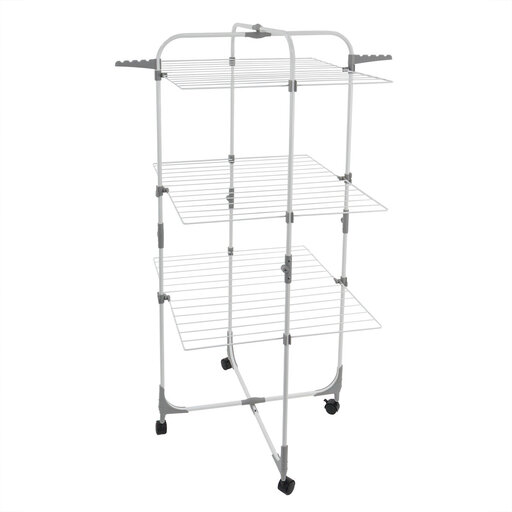
Why It Stands Out: This airer is a workhorse for busy homes, offering an impressive amount of drying space on a vertical frame that maximises room capacity. Its clever design allows for versatile configurations.
Pros:
- Generous Capacity: Provides 28 metres of drying space across 42 bars.
- Versatile Tiers: The shelves can be dropped to accommodate longer items like trousers or bedding.
- Extra Hanging Space: Includes two side hooks for hanging shirts or suits on coat hangers.
- Sturdy and Mobile: Holds up to 18kg of laundry and features four wheels for easy movement.
- Folds for Storage: Folds down to a compact size for convenient storage when not in use.
Who is it for? Families or households with large, frequent laundry loads who need a high-capacity solution without taking up excessive floor space.
JVL Three-Tier Folding Concertina Laundry Clothes Horse Airer
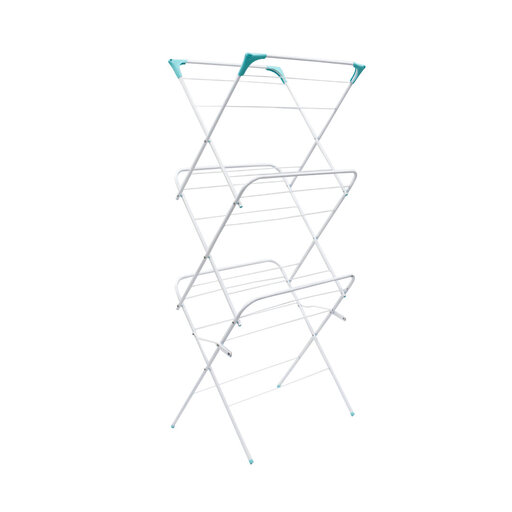
Why It Stands Out: The classic concertina or accordion-style design is a proven space-saver. This model is lightweight, easy to set up and folds away almost completely flat, making it perfect for smaller living spaces.
Pros:
- Compact Design: Offers 14 metres of drying space in a slim, upright frame.
- Folds Flat: The concertina mechanism allows it to be stored easily behind a door or in a narrow cupboard.
- Lightweight Construction: Made from tubular steel, it is easy to move from room to room.
- Bonus Hanger Hooks: Features four corner hooks for hanging extra items on hangers.
- Floor Protection: Plastic corner feet prevent scratches on hard floors.
Who is it for? Individuals, couples or those living in flats, caravans or homes where storage space is at a premium.
BLACK+DECKER Heated Winged Airer
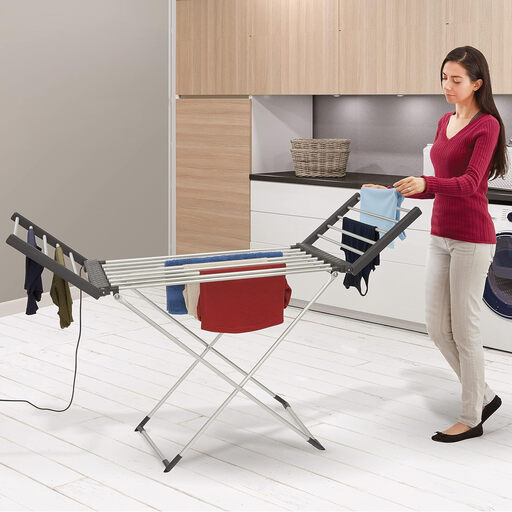
Why It Stands Out: This heated clothes airer is an economical and effective tumble dryer alternative. It combines the large surface area of a winged airer with the speed of heated bars, tackling damp laundry quickly and affordably.
Pros:
- Cost-Effective Drying: According to the brand, it costs approximately 6.2p per hour to run, offering significant savings over a tumble dryer.
- Heated Wings: Features 18 heated bars, including on the fold-out wings, for comprehensive drying.
- Good Capacity: Provides 11.5 metres of drying space and holds up to 10kg of laundry.
- Lightweight and Foldable: Easy to set up where needed and folds down for simple storage.
Who is it for? Anyone looking to accelerate indoor drying times during cold or wet weather without incurring the high energy costs of a tumble dryer.
Looking for More Options?
While these recommendations cover some of the most common needs, every home is different. If you're looking for a different size, style or feature set, there are many other solutions available.
Explore our full collection of laundry and hanging clothes solutions to find the perfect fit for your home.
Frequently Asked Questions About Clothes Airers
1. How can I make my clothes dry faster on a standard airer? To speed up drying, ensure good air circulation. Space your garments evenly, leaving gaps between them. Placing the airer in a well-ventilated room, near an open window (weather permitting) or a dehumidifier, can make a significant difference. Rotating the clothes after a few hours also helps them dry more evenly.
2. Are heated clothes airers expensive to run? No, they are generally very economical. Unlike tumble dryers, which can use a great deal of power, a heated airer uses low-wattage elements. As noted with the BLACK+DECKER model, running costs can be as low as a few pence per hour, making them a highly cost-effective way to dry clothes faster.
3. What is the difference between a clothes airer and a clothes horse? The terms are often used interchangeably in the UK. A clothes horse is a more traditional name, often referring to a simple, foldable wooden or metal frame. A clothes airer is a modern, all-encompassing term that includes a wide variety of designs, such as tiered racks, winged airers and heated models. Essentially, they both serve the same purpose.