
Your Guide to Choosing Ceramic Kitchenware in the UK
As a Joybuy Product Recommendation Officer, my role is to help you navigate the crowded market of kitchen essentials. When it comes to ceramic kitchenware, the choices can be overwhelming. It’s a staple in many UK homes for its classic look and versatility, but not all ceramic is created equal. A poor choice can lead to cracked dishes, stained surfaces and wasted money. This guide will help you identify the key features to look for and avoid the common purchasing pitfalls.
The Hidden Flaws in Common Ceramic Kitchenware
Before you add that stylish set to your basket, be aware of a few frequent issues that marketing materials often gloss over. Understanding these can save you from future disappointment.
- The "Oven-Safe" Deception: Many products are labelled "oven-safe," but this term can be misleading. Some have a surprisingly low maximum temperature, making them unsuitable for proper baking. Worse still, items like ramekins with lids may have ceramic bases that can withstand heat, but plastic lids that will warp or melt in the oven, rendering a key feature useless.
- The Porosity Problem: Lower-quality ceramic or items with a thin, poorly applied glaze can be porous. This means they absorb oils, sauces and odours over time. Your pristine white bowls can quickly become stained by curry or bolognese, and they can be harder to clean, posing a potential hygiene risk.
- Inefficient Design for UK Kitchens: With cupboard space often at a premium, stackability is crucial. Many attractive ceramic serving bowls have awkward shapes or footings that prevent them from nesting securely, leading to wobbly, space-wasting stacks. This simple design flaw can make storage a daily frustration.
Core Parameters to Check Before You Buy
To ensure your new kitchenware is a lasting investment, focus on these non-negotiable specifications.
Material and Glaze Quality
The terms "ceramic" and "porcelain" are often used interchangeably, but there is a difference. Porcelain is a type of ceramic fired at a much higher temperature. This process, called vitrification, makes it denser, less porous and generally more durable than standard ceramic. When shopping, look for products made from high-grade, lead-free and non-toxic materials. A quality glaze should be smooth, thick and scratch-resistant, forming a non-porous barrier that prevents staining and makes cleaning effortless.
True Multi-Appliance Versatility
For maximum convenience, your kitchenware should seamlessly transition between appliances. This means it must be genuinely safe for:
- Oven: Check for a clearly stated maximum temperature. This is vital for items like oven safe ramekins, soufflé dishes set and other small baking dishes.
- Microwave: A must-have for reheating. Look for confirmation that the item is a set of microwave safe bowls.
- Freezer: Ideal for meal prep or storing leftovers.
- Dishwasher: For easy, hassle-free cleaning.
Always check if accessories, like lids, share the same properties. A ceramic dish that is oven-safe is of limited use if its lid is not.
Functional Design and Dimensions
Consider how the item will fit into your daily routine. For individual portion dishes like crème br?lée dishes, an 8 oz (approx. 230ml) capacity is a versatile standard. For family meals, porcelain pasta bowls with a capacity of 30 oz (approx. 850ml) or more are far more practical. Finally, always check if the design allows for stable, space-saving stacking.
Our Top Product Recommendations
Based on these practical criteria, here are some recommendations matched to different household needs.
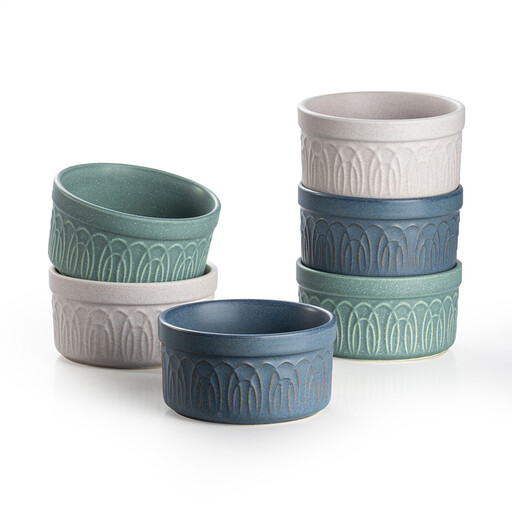
DAFUCERAMIC Ramekins 8 Oz Oven Safe, Set of 6, Assorted Neutrals
Why This Fits Their Persona: This set is ideal for someone who loves making and serving individual desserts like crème br?lée or soufflés, or starters like baked cheese. The assorted neutral colours are elegant and fit seamlessly with any existing dinnerware for entertaining guests.
Crafted from high-quality, non-porous ceramic, it resists staining and odours. It is genuinely oven, microwave and dishwasher safe, avoiding the "oven-safe" deception.
The versatile 8 oz capacity is perfect for a wide range of recipes. The durable, scratch-resistant glaze ensures longevity and easy cleaning.
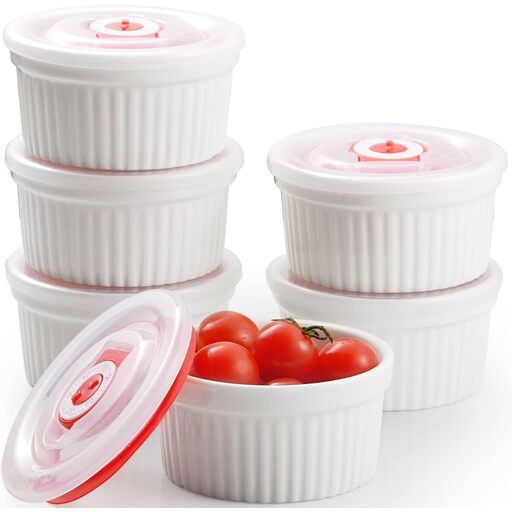
Dafuceramic Ramekins with Lids 8 oz White, Set of 6
Why This Fits Their Persona: For those who plan their meals for the week, this set is a game-changer. The individual portion size is perfect for lunches or desserts, and the lids make storage clean and simple, allowing them to go from freezer to microwave to table.
The plastic lids are designed for storage and microwave use (up to 120°C), directly addressing the trap of useless accessories. The porcelain ramekins are stackable, saving valuable fridge and cupboard space.
The standout feature is the functional lid with a built-in date dial, allowing you to easily track when food was stored for better organisation.
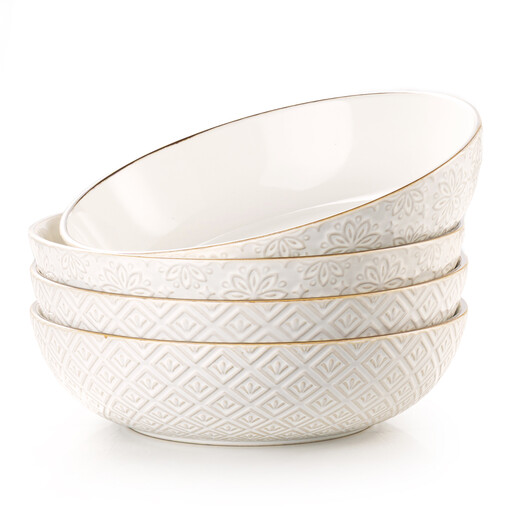
Dafuceramic 8.5-Inch Pasta Bowls, 36-OZ Serving Bowls, Set of 4
Why This Fits Their Persona: Perfect for serving generous portions of pasta, salads or stews at family dinners or gatherings. The wide, deep design makes them highly versatile for main courses, moving beyond just being a pasta bowl.
These bowls are specifically designed for secure, space-saving stacking, solving the inefficient design problem. The high-temperature fired ceramic is non-porous and durable, preventing stains.
The generous 36 oz capacity and thickened wall construction provide enhanced strength and utility for serving large meals. They are fully oven, microwave and dishwasher safe.
Looking for More Options?
We have compiled a complete, real-time list of products that fully satisfy these strict selection criteria and UK safety regulations.
Frequently Asked Questions
What is the difference between porcelain and ceramic kitchenware?
Porcelain is a specific type of ceramic that is made from a finer clay and fired at a much higher temperature. This process makes it more dense, less porous and more resistant to chipping and staining compared to general earthenware or stoneware ceramics. For kitchen use, porcelain often offers superior durability and hygiene.
Can you put ceramic kitchenware from the freezer straight into the oven?
No, this is not recommended. Moving a ceramic dish directly from a very cold environment (like a freezer) to a very hot one (a preheated oven) can cause thermal shock, which may lead to the dish cracking or shattering. It is always safer to let the dish sit at room temperature for a while before placing it in the oven.
How can I tell if my ceramic kitchenware is truly microwave and dishwasher safe?
Always check the bottom of the dish or the product's packaging for symbols indicating it is safe for microwave and dishwasher use. A microwave-safe symbol typically looks like a microwave with wavy lines, while a dishwasher-safe symbol often depicts dishes being sprayed with water. If these symbols are absent, it is best to err on the side of caution and wash by hand.