
Choosing the Right Car Jack: A UK Driver’s Buying Guide
Whether you're faced with a flat tyre on a rainy Tuesday morning or planning some weekend DIY maintenance, a reliable car jack is an essential piece of kit for any vehicle owner. But with so many types available—from compact scissor jacks to powerful hydraulic models—choosing the right one can feel overwhelming.
This guide is designed to cut through the clutter. We'll walk you through the key considerations for selecting a jack that matches your vehicle and your needs, ensuring you can lift your car safely and efficiently.
How to Choose a Car Jack for Your Vehicle
Making the right choice comes down to a few key factors. Paying attention to these details will ensure you get a tool that is both safe and practical for your specific situation.
1. Match the Lifting Capacity to Your Vehicle's Weight
The most critical specification is the jack's lifting capacity, measured in tonnes. A jack doesn't need to lift your entire car, only the corner or end you are working on. A good rule of thumb is to choose a jack rated for at least 75% of your vehicle's total gross weight. For most family cars, saloons and smaller SUVs, a 3 tonne trolley jack provides a safe margin and is a versatile choice for a home garage. Always check your vehicle's handbook for its official gross vehicle weight.
2. Understand the Different Jack Types
There are two main types of jacks for consumer use, each with distinct advantages:
- Scissor Jack: This is a mechanical jack operated by turning a lead screw. A scissor jack is typically lightweight, compact and folds down flat, making it the perfect emergency car jack to keep in your boot for roadside tyre changes.
- Hydraulic Jack (Trolley Jack): A trolley jack uses hydraulic fluid to lift the vehicle with the pumping action of a handle. They are faster, require less physical effort and are generally more stable due to their wider base and wheels. This makes them the preferred choice for home mechanics who perform regular maintenance. They come in various materials, including heavy-duty steel and lighter-weight aluminium trolley jack models.
3. Check the Lifting Range and Profile
The "profile" refers to the jack's minimum height (its starting point), while the lifting range is the difference between its lowest and highest points. If you own a sports car or a vehicle with lowered suspension, a low profile car jack is essential to fit underneath the chassis. Conversely, if you have a car jack for an SUV or a van with high ground clearance, you'll need a jack with a higher maximum lift height to get the wheels off the ground.
Top Car Jack Recommendations
Based on common user needs, from emergency preparedness to regular garage work, here are our recommendations.
For Emergency Roadside Use and Compact Storage
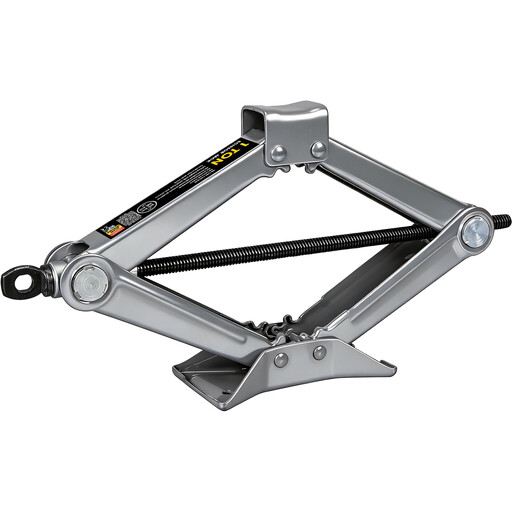
TCE 1 Tonne Scissor Car Jack 88-380mm Ultra Low Profile
- Why It Stands Out: This jack’s standout feature is its combination of an ultra-low 88mm starting height and a compact, foldable design. It can be easily stored in the boot without taking up valuable space, making it an ideal replacement or upgrade for the basic jack supplied with many cars.
- Pros:
- Lifting Capacity: 1 tonne (1,000kg)
- Lifting Range: 88mm – 380mm
- Compact Storage: Folds down to just 88mm in height.
- Low Profile: Easily slides under low-clearance vehicles.
- Easy Operation: The crank handle is designed for smooth, low-effort lifting.
- Who is it for? Drivers of saloons, city SUVs and low-slung cars who need a dependable and compact emergency car jack for tyre changes and basic inspections.
For General Home Garage and SUV Maintenance
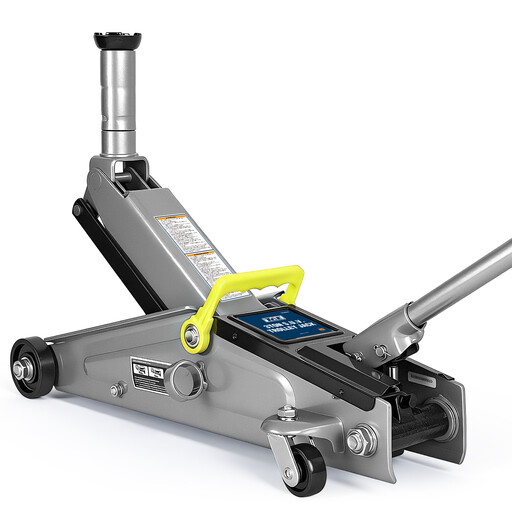
TCE 3 Tonne Horizontal Hydraulic Car Jack 150-530mm
- Why It Stands Out: This is a robust, no-nonsense heavy duty car jack. Its all-steel construction and 3-tonne capacity make it a workhorse for the home garage. The wide lifting range and built-in safety valve provide the versatility and security needed for working on a variety of family vehicles.
- Pros:
- Lifting Capacity: 3 tonnes (3,000kg)
- Lifting Range: 150mm – 530mm
- Durable: Heavy-duty steel structure for stability and longevity.
- Safety: Equipped with an overload safety valve and is CE certified.
- Versatile: Suitable for most cars, SUVs and MPVs.
- Who is it for? The home DIY mechanic and owners of larger vehicles who need a powerful and reliable hydraulic jack for tasks like brake changes, oil changes and tyre rotations.
For Performance Cars and Enthusiasts
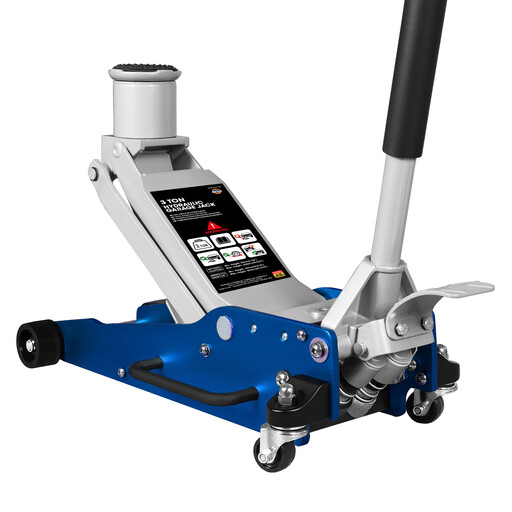
TCE 3 Tonne Aluminium Alloy Horizontal Hydraulic Car Jack 85-465mm
- Why It Stands Out: This jack combines high performance with user-friendly features. The aluminium alloy body makes it significantly lighter than its steel counterparts, while the dual-pump system lifts vehicles to the desired height much faster. Its ultra-low 85mm profile is perfect for sports cars, and the included height extender adds versatility for tackling SUVs and vans.
- Pros:
- Lifting Capacity: 3 tonnes (3,000kg)
- Lifting Range: 85mm – 465mm (or 161mm – 541mm with extender)
- Ultra-Low Profile: An 85mm entry height fits under most performance cars.
- Quick Lift: Dual-pump mechanism reduces the number of pumps needed.
- Lightweight: The aluminium trolley jack construction makes it easier to position and store.
- Who is it for? Car enthusiasts, owners of sports cars or lowered vehicles and anyone who wants a premium, lightweight and fast-acting low profile car jack for their garage.
Looking for More Options?
Our recommendations cover some of the most common requirements for UK drivers. However, if you have different needs or are looking for other workshop equipment, there are many other solutions available.
Explore our full range to find the perfect fit for your garage. Browse our complete collection of Tools and Accessories
Frequently Asked Questions About Car Jacks
1. What size car jack do I need? To be safe, choose a jack with a lifting capacity that is at least three-quarters (75%) of your vehicle's total weight. For example, if your car weighs 2,000kg (2 tonnes), a jack rated for 1.5 tonnes or more is required. A 3 tonne trolley jack is a popular and safe choice that covers the majority of passenger cars and SUVs in the UK.
2. Is a trolley jack better than a scissor jack? Neither is "better"; they serve different purposes. A trolley jack (hydraulic) is superior for garage use due to its stability, speed and ease of lifting. A scissor jack is designed for portability and is the best option for an emergency car jack to be kept in your vehicle for roadside situations.
3. How do I use a car jack safely? Safety is paramount. Always use a jack on a hard, level surface. Before lifting, engage your handbrake and put the car in gear (or Park for automatics). Place wheel chocks behind the wheels that are remaining on the ground. Most importantly, never get under a vehicle that is supported only by a jack. Always use correctly rated axle stands for any work that requires you to be under the car.