
Finding the Right Car Diagnostic Tool: Top Recommendations
That dreaded orange glow on your dashboard—the check engine light. It’s a familiar sight for many UK drivers, often followed by the uncertainty of what’s wrong and the potential for a costly trip to the garage. Taking control of your vehicle's health doesn't have to be complicated or expensive. A modern car diagnostic tool empowers you to understand your vehicle's issues, perform routine maintenance and make informed decisions about repairs.
This guide is designed to help you navigate the options, from simple code readers to professional-grade scanners. We'll break down the essential features to look for and share our recommendations to help you find a tool that fits your needs and budget, whether you're a hands-on car enthusiast or a small garage owner.
How to Choose a Car Diagnostic Tool
Selecting the right scanner can feel overwhelming with all the technical jargon. Here are a few key considerations to help you make a confident choice.
1. System Coverage: Beyond the Basic Engine Check
The most basic vehicle code reader will only access the engine control unit (ECU) to tell you why the check engine light is on. However, modern cars have dozens of electronic systems. For comprehensive troubleshooting, you need an all system diagnostic tool. This provides access to crucial modules like:
- ABS (Anti-lock Braking System): For diagnosing brake-related faults.
- SRS (Supplemental Restraint System): For airbag system issues.
- Transmission: To monitor gearbox performance and faults.
- EPB (Electronic Parking Brake): For servicing and calibrating electronic handbrakes.
A tool with full system access gives you a complete picture of your vehicle's health, far beyond what a standard check engine light tool can offer.
2. Advanced Functions: Service Resets and Bi-Directional Control
To truly save on workshop fees, look for a scanner with advanced service functions. These allow you to perform common maintenance tasks yourself. Important functions include:
- Oil Reset: To reset the service light after an oil change.
- ABS Bleeding Tool: To cycle the ABS pump and remove air from the brake system.
- SAS Calibration: To reset the steering angle sensor after an alignment.
- DPF Regeneration: To clear soot from the diesel particulate filter.
For the most advanced users, a bi-directional scan tool is a game-changer. This feature, also known as an active test, allows the scanner to send commands to the vehicle's components to test their functionality. You can activate wipers, roll down windows or cycle a fuel pump directly from the tool to pinpoint the exact cause of a problem.
3. Connectivity and Compatibility
Modern diagnostic tools offer greater flexibility than ever. A wireless car scanner, often a Bluetooth OBD2 scanner, connects to an app on your smartphone or tablet (Android & iOS). This makes it highly portable and easy to update. Ensure any tool you consider is EOBD compliant, which is the standard for all petrol cars sold in the UK since 2001 and diesel cars since 2004.
Recommended Car Diagnostic Tools
Here are our top recommendations, selected for their features, value and suitability for UK car owners and DIY mechanics.
Autel MaxiCOM MK808BT PRO
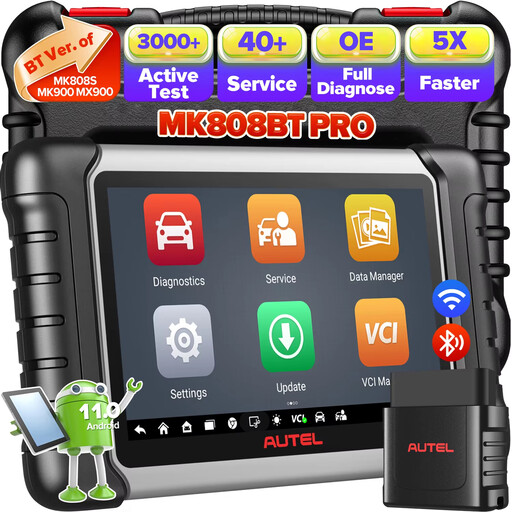
Why It Stands Out: The Autel MK808BT PRO is a powerful, tablet-style scanner that bridges the gap between DIY and professional tools. Its wireless Bluetooth connection offers freedom of movement around the vehicle, while its comprehensive software provides dealer-level insights. The inclusion of bi-directional control at this price point is a significant advantage for in-depth troubleshooting.
Pros:
- OE-Level All Systems Diagnostic: Accesses all available electronic modules on over 150 car makes.
- Bi-Directional Control / Active Test: Send commands to vehicle components to test their operation.
- 38+ Maintenance Services: Includes EPB reset, DPF regeneration, SAS calibration and ABS bleeding.
- Wireless Bluetooth Connection: Stable wireless diagnostics with a range of up to 10 metres.
- FCA Auto Auth Support: Accesses secure gateways on modern Fiat, Chrysler and Dodge vehicles.
Who is it for? Serious DIY mechanics and small independent garages who need a reliable, all-in-one tool with advanced diagnostic capabilities and broad vehicle coverage.
XTOOL A30M Wireless Car Diagnostic Tool
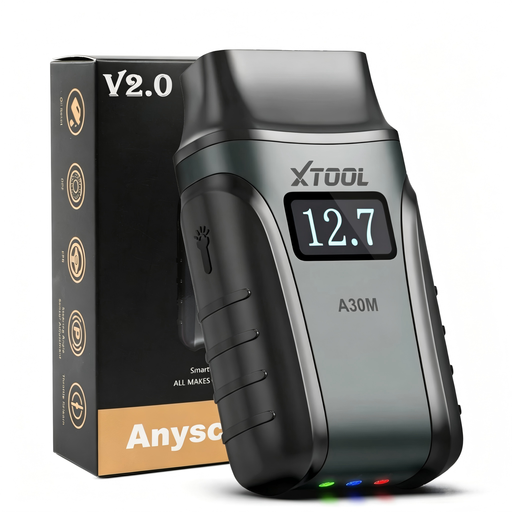
Why It Stands Out: The XTOOL A30M offers exceptional value by packing bi-directional control and full system diagnostics into a compact Bluetooth OBD2 scanner dongle. Its biggest draw is the lifetime free updates for all functions and vehicle software, eliminating any future subscription costs. It's a "buy once, use forever" solution for professional car diagnostics on a budget.
Pros:
- Lifetime Free Updates: No subscription fees for software, new vehicles or service functions.
- Bi-Directional Control: Perform active tests on various vehicle systems.
- OE-Level Full System Diagnostics: Read/clear codes, view live data and retrieve ECU information from all modules.
- 26+ Maintenance Services: Covers essential resets like oil, ABS bleeding, injector coding and more.
- Portable and Wireless: A compact dongle that works with both Android & iOS devices.
Who is it for? Tech-savvy DIY enthusiasts who want a powerful, portable scanner with advanced features like bi-directional control without the worry of ongoing subscription fees.
MUCAR BT200 Pro OBD2 Scanner
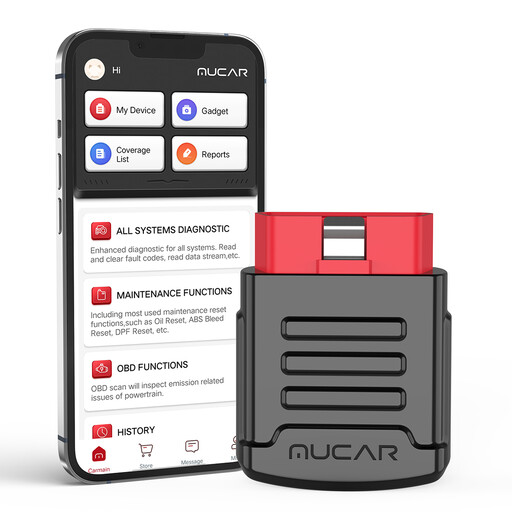
Why It Stands Out: The MUCAR BT200 Pro is an incredibly cost-effective entry into full-system diagnostics. It provides lifetime free access to diagnose all electronic systems on over 128 car brands. While its 15 reset services are free for the first year, the lifetime full-system scanning capability alone makes it a standout choice for budget-conscious users who need to look beyond the engine.
Pros:
- Lifetime Free Full-System Diagnostics: A one-off purchase provides permanent access to diagnose engine, ABS, SRS, transmission and more.
- Wide Vehicle Compatibility: Supports over 128 car brands worldwide.
- 15 Reset Functions (1-Year Free): Includes popular services like oil reset, SAS calibration and EPB reset.
- Compact and Bluetooth-Enabled: A simple plug-and-play dongle that connects wirelessly to your smartphone.
Who is it for? Car owners and new DIYers who want to move beyond basic code readers and gain access to full-system diagnostics without a significant initial investment.
Looking for More Specialised Tools?
While the tools above offer comprehensive capabilities, some tasks require highly specialised equipment. If your primary focus is on vehicle tyre maintenance, you may need a tool with advanced TPMS (Tyre Pressure Monitoring System) functions.
For those focusing on tyre maintenance, explore our curated selection of OBD2 TPMS relearn tools to find the perfect fit for your needs.
Frequently Asked Questions
1. What is the difference between a basic OBD2 scanner and an all-system diagnostic tool? A basic OBD2 scanner typically only reads and clears codes from the engine and emissions systems (the cause of the "check engine light"). An all system diagnostic tool can communicate with all electronic control units in a vehicle, including the ABS, airbags (SRS), transmission, climate control and more, providing a much more complete diagnostic overview.
2. Can a car diagnostic tool damage my car's ECU? When used correctly, a reputable diagnostic tool will not damage your vehicle's ECU. These tools are designed to communicate with the car's computer using standardised protocols. It is important to follow the manufacturer's instructions and ensure the vehicle's ignition is in the correct position during use.
3. Do I need to pay for subscriptions with these tools? It depends on the tool. The XTOOL A30M, for example, offers lifetime free updates for all its software and functions. The MUCAR BT200 Pro provides lifetime free full-system diagnostics, but its advanced reset services require a subscription after the first year. The Autel MK808BT PRO includes one year of free updates, after which a subscription is needed to continue receiving the latest software. Always check the update policy before purchasing.