
Our Top Recommendations for a Build Your Own Engine Kit in 2026
Finding a gift that truly engages a curious mind or a hobby that offers a real sense of accomplishment can be a challenge. Many of us are looking for something more than just a screen-based activity—a hands-on project that teaches valuable skills while still being fun. A build your own engine kit is an excellent solution, offering a fascinating glimpse into the world of mechanical engineering for both young learners and adult enthusiasts.
As a Joybuy Product Recommendation Officer, my role is to help you navigate the options. This guide provides practical advice and highlights some of our top recommendations to help you choose a model that delivers a rewarding building experience.
How to Choose the Right Engine Building Kit
Before you dive into the assembly, here are a few key points to consider to ensure you select the right kit for yourself or as a gift.
1. Assess the Complexity and Target Age
Engine kits vary significantly in their complexity. A 4 cylinder engine model is often a great starting point, typically featuring around 100 parts and providing a clear introduction to mechanical principles. For a more involved project, a V8 engine model kit can contain over 250 parts, offering a deeper challenge for older teens or adult hobbyists. Always check the manufacturer's recommended age, especially when buying a car engine building kit for kids, to ensure the project is engaging rather than frustrating.
2. Look for Educational and Interactive Features
The primary appeal of a STEM engine kit is its educational value. A transparent engine model is a standout feature, as it allows the builder to see exactly how the pistons, crankshaft and valves work together. Many modern kits also include electronic components, such as a sound module that replicates real engine noises and LED lights that simulate the firing of spark plugs. Some even come with instruction manuals endorsed by reputable names like Haynes, adding a layer of authenticity to the build.
3. Prioritise a Complete and Accessible Build
A good automotive hobby kit should be an all-in-one solution. Look for models that include all the necessary components and do not require glue, soldering or specialised tools. This makes the assembly process smoother and more accessible, allowing the focus to remain on the learning and enjoyment of building a working model engine. Clear, step-by-step instructions are also crucial for a successful build.
Our Top Recommendations for 2026
Based on these criteria, we've selected two engine kits that offer an excellent balance of educational value, build quality and engaging features.
Machine Works Build Your Own 4-Cylinder Engine
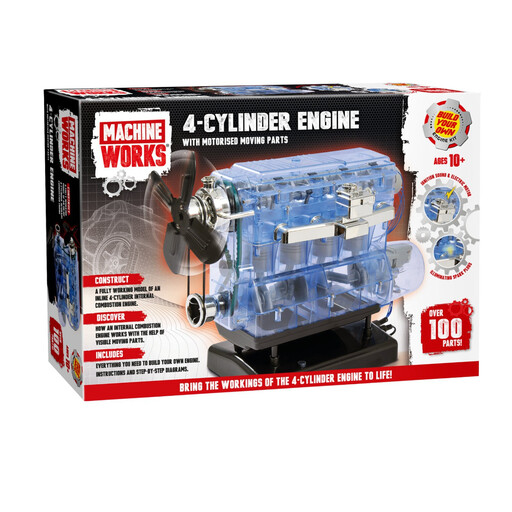
Why It Stands Out This kit is a fantastic entry point into the world of internal combustion engines. It simplifies the core concepts of a four-stroke engine into a manageable and rewarding project. The inclusion of a Haynes engine model style manual provides clear, authoritative guidance, while the transparent casing allows you to see every moving part in action. The accompanying augmented reality app adds a modern, interactive layer to the learning experience.
Pros
- Comprehensive Kit: Includes over 100 parts to construct a detailed 1:4 scale replica.
- Interactive Elements: Features an electric motor, realistic engine sounds and illuminating spark plugs.
- Clear Casing: The transparent engine model design makes it easy to observe the mechanical movements.
- No Glue Required: All parts screw or clip together for a clean and straightforward assembly.
Who is it for? This model is well-suited for children aged 10 and up who are developing an interest in mechanics, as well as adult beginners looking for an accessible and satisfying automotive hobby kit.
Machine Works Build Your Own V8 Engine
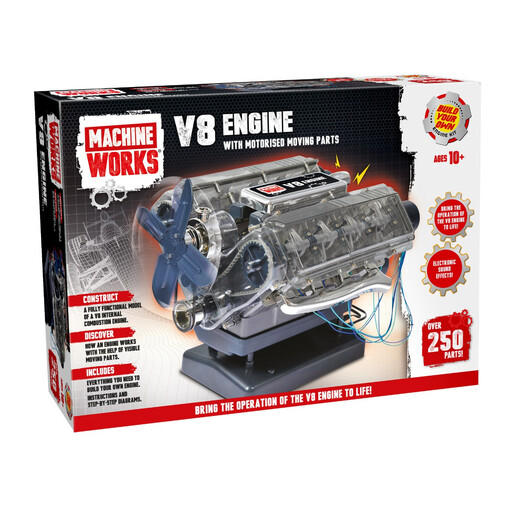
Why It Stands Out For those seeking a more substantial challenge, this V8 engine model kit delivers. With over 250 parts, it provides a more in-depth construction experience, culminating in an impressive model of a dual overhead cam V8. Like its 4-cylinder counterpart, it features a transparent housing and interactive elements, but the increased complexity and the iconic V8 design make it a standout display piece for any enthusiast.
Pros
- Advanced Build: Contains over 250 precision parts for a more detailed and complex assembly.
- Authentic V8 Experience: Replicates the look and sound of a powerful V8 engine.
- Educational and Engaging: The motorised model demonstrates the complete four-stroke cycle with moving parts and light effects.
- Haynes-Endorsed Manual: Comes with a detailed, easy-to-follow instruction booklet to guide the build.
Who is it for? This kit is ideal for more experienced model builders, older teenagers (12+) and adult automotive fans who want a project that is both challenging and highly rewarding. It serves as an excellent next step after mastering simpler models.
Looking for Other Options?
If these engine kits aren't quite what you're looking for, or if you'd like to explore other mechanical marvels, we have a wide selection of projects to spark your curiosity.
Discover more hands-on projects in our full range of engineering toys.
Frequently Asked Questions
H3: What age is a build your own engine kit for?
Most engine building kits are designed for ages 10 and up. Simpler models, like a 4 cylinder engine model, are great for younger builders (10-12), while more complex kits like a V8 engine model kit are better suited for teenagers and adults. It is always recommended that a child uses the kit under adult supervision, especially due to small parts.
H3: Do you need glue or paint for these engine model kits?
The models we've highlighted are designed for a clean, tool-friendly assembly. The parts are made to screw or clip together securely, so you will not need any glue or paint. All you typically need is a screwdriver (often included) and the batteries to power the motor.
H3: Is a working model engine a good STEM toy?
Absolutely. A working model engine is an exceptional STEM engine kit because it provides a practical, hands-on application of science, technology, engineering and maths. It teaches fundamental principles of mechanics and engineering in a way that is far more memorable than reading from a textbook. Building the model develops problem-solving skills, patience and an understanding of how complex machines function.