
Our Top Recommendations for a Wireless Gaming Mouse in 2026
As a competitive gamer, you know that every millisecond and every pixel counts. A missed shot or a delayed input can be the difference between victory and defeat. While wired mice were once the only choice for serious players, modern wireless technology has closed the gap, offering the freedom of movement without sacrificing the speed and precision required for top-tier play.
Navigating the market for a wireless gaming mouse can be challenging. Specifications like DPI, polling rates and sensor types are thrown around, but what do they actually mean for your performance in-game? This guide is designed to cut through the clutter, helping you understand the key features that matter and providing our recommendations for models that deliver on their promises.
Choosing Your Competitive Edge: A Quick Buying Guide
Before we look at specific products, let's break down the essential factors to consider when selecting a pro gaming mouse.
1. Sensor Performance: The Heart of Precision
The sensor is the most critical component for accuracy. Look for these key metrics:
- DPI (Dots Per Inch): This measures how sensitive the mouse is. A high DPI mouse isn't always better; what matters is having a wide, adjustable range to find the sensitivity that suits your playstyle. Most professional players use a DPI between 400 and 1600.
- IPS (Inches Per Second): This is the maximum speed the mouse can be moved while still tracking accurately. For fast-paced FPS games, a higher IPS (300+) prevents the sensor from "spinning out" during rapid flicks.
- Polling Rate (Hz): This indicates how often the mouse reports its position to the computer. A standard gaming mouse has a 1000 Hz polling rate (1ms response time). Newer models offer 4000 Hz or even 8000 Hz for an even more immediate low latency wireless mouse experience.
2. Weight and Shape: Comfort for the Marathon
The physical design of the mouse is just as important as its internal hardware.
- Weight: The trend in the esports gaming mouse category is towards ultralight designs. A lightweight gaming mouse (typically under 70 grams) can reduce wrist fatigue during long sessions and make rapid movements feel more effortless.
- Ergonomics: The shape should match your grip style (palm, claw or fingertip). A comfortable mouse allows for hours of play without cramping or discomfort, ensuring your focus remains on the game.
3. Connectivity: Freedom Without Compromise
The primary concern with wireless mice has always been latency and stability. Modern 2.4GHz RF wireless technology has largely solved this. It provides a stable, low-latency connection that is indistinguishable from a wired one for human perception, making it the standard for competitive play. Bluetooth is a useful secondary option for on-the-go use but is not recommended for serious gaming due to its higher latency.
Our Top Recommendations for 2026
Here are our recommendations for wireless gaming mice that stand out for their performance, design and features, tailored for the competitive gamer.
ASUS ROG Harpe II Wireless Esports Gaming Mouse - Moonlight White
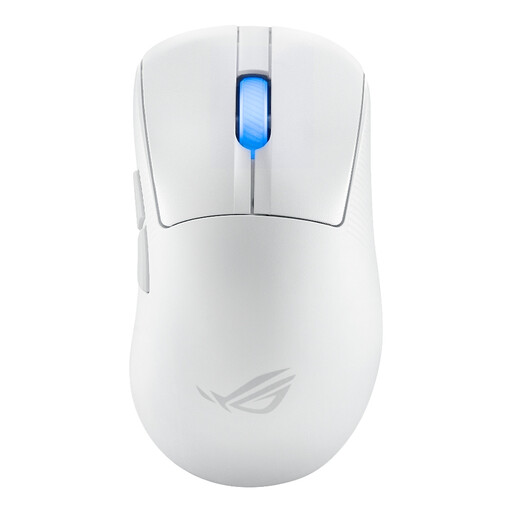
- Why It Stands Out: The ROG Harpe II Ace was developed in direct collaboration with esports professionals, and it shows. It achieves an astonishingly low weight of just 48 grams without resorting to a honeycomb shell, using an innovative bio-based nylon material for a solid, durable feel. Its standout feature is the ROG SpeedNova 8K wireless technology, which delivers an 8000 Hz polling rate in both 2.4GHz wireless and wired modes for near-instantaneous response.
- Pros:
- Extremely lightweight at 48g for minimal fatigue and maximum speed.
- Industry-leading 8000 Hz wireless polling rate for superior responsiveness.
- High-performance 42,000 DPI ROG AimPoint Pro sensor with flawless tracking.
- Solid shell construction feels premium and avoids dust build-up.
- Who is it for? The serious FPS or MOBA competitor who demands the absolute lowest latency and weight to gain a competitive edge. This is a top-tier best mouse for FPS players.
View Details for ASUS ROG Harpe II
Machenike L9 X1 Wireless Mouse - White
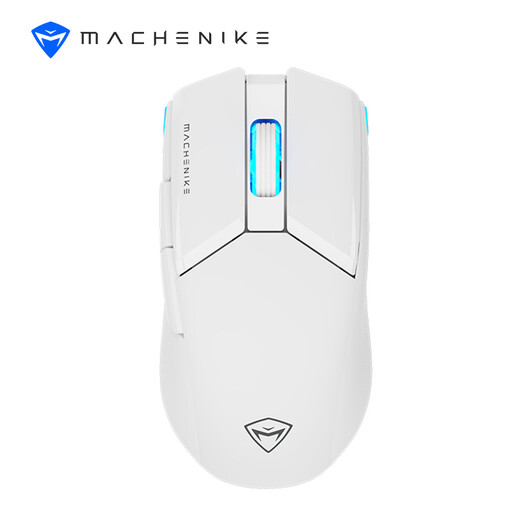
- Why It Stands Out: The Machenike L9 X1 offers an impressive suite of high-performance features in a sleek package. Weighing only 53 grams, it is another excellent lightweight gaming mouse option. It is built around the highly regarded PAW3395 sensor, known for its raw accuracy and 26,000 DPI capability. The symmetrical design makes it adaptable for various grip styles, and the web-based driver means you can configure settings without installing bulky software.
- Pros:
- Very lightweight 53g design engineered for esports.
- Features the proven and precise PAW3395 optical sensor.
- Symmetrical shape suitable for multiple grip styles.
- Web-based driver for easy, software-free customisation.
- Who is it for? Gamers looking for a high-performance, lightweight mouse with a top-tier sensor who appreciate the convenience of a plug-and-play, software-free setup.
View Details for Machenike L9 X1
Logitech G502 X Wireless Gaming Mouse - White
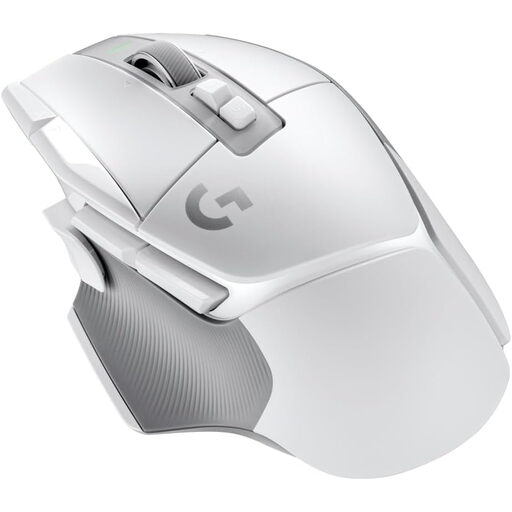
- Why It Stands Out: The G502 X is the latest evolution of a legendary shape. While not an ultralight mouse at 102 grams, it offers a highly sculpted ergonomic design and a wealth of features. It introduces LIGHTFORCE hybrid optical-mechanical switches, which provide the tactile click of a mechanical switch with the speed of optical actuation. The HERO 25K sensor is exceptionally accurate and with 13 programmable buttons, it's a powerhouse for versatility in any game genre.
- Pros:
- Proven ergonomic shape provides excellent comfort and control.
- LIGHTFORCE hybrid switches offer a satisfying tactile feel with optical speed.
- 13 programmable buttons for extensive customisation.
- Compatible with POWERPLAY for continuous wireless charging (sold separately).
- Who is it for? The all-around gamer who values ergonomic comfort and customisation over minimal weight. It's ideal for those who play a variety of games, from FPS to MMOs and appreciate the iconic G502 shape.
View Details for Logitech G502 X
Looking for More Options?
The products above represent some of the most compelling choices for competitive gamers. However, the market is vast, with many excellent models available. If you have a specific aesthetic in mind, such as building an all-white setup or simply want to browse a wider selection, we can help.
Explore our full range of high-performance models in the white wireless gaming mouse category to find the perfect match for your rig and playstyle.
Frequently Asked Questions
Q1: Is a wireless gaming mouse really good enough for competitive gaming?
Yes. Modern 2.4GHz wireless technology, like Logitech's LIGHTSPEED or ROG's SpeedNova offers polling rates of 1000 Hz or higher, resulting in response times of 1ms or less. This is on par with wired mice and is trusted by professional esports athletes in major tournaments.
Q2: How important is DPI for a gaming mouse?
While a high maximum DPI is a sign of a capable sensor, it is not a direct measure of performance. Most professional players use a relatively low DPI setting (e.g., 400, 800 or 1600) because it allows for more precise, controlled movements. The key is to have a mouse with a high-quality sensor that is accurate across its entire DPI range, allowing you to find the sensitivity that works for you.
Q3: What is a good weight for a lightweight gaming mouse?
There is no single "best" weight, as it comes down to personal preference. However, the current trend for competitive FPS mice is to be as light as possible. Generally, anything under 75 grams is considered lightweight, while mice under 60 grams are in the ultralight category. A lighter mouse can help reduce fatigue and make it easier to perform quick, large movements.