
Finding the Right White Chocolate for Baking: Our Top Recommendations for 2026
White chocolate can be a delightful addition to any baker's pantry, lending a creamy sweetness and pale elegance to everything from cookies to elaborate cakes. However, not all white chocolate is created equal. Choosing the wrong type can lead to frustrating results—a grainy ganache, a seized sauce or a flavour that's more sugary than sublime.
The key is understanding that the bar you enjoy as a snack is often different from the one designed for the heat of the oven. This guide is here to help you navigate the options. As a Joybuy Product Recommendation Officer, my role is to provide clear, practical advice to help you select the right ingredients for your culinary projects. Let's explore what makes a good white chocolate for baking and look at some reliable choices available today.
How to Choose White Chocolate for Your Bakes
Before you add an item to your basket, considering a few key factors will ensure your baking is a success.
1. Form Follows Function: Bar vs. Chips
The first decision is often about format. Your recipe's needs will determine whether a solid bar or pre-made chips are more suitable.
- Baking Chocolate Bar: A solid baking chocolate bar is your go-to for any application that requires melting. Generally containing a higher percentage of cocoa butter, this format is designed to create a smooth, fluid consistency. It's ideal for making silky ganaches, glossy cake drips, delicate decorative shavings and rich sauces. If your recipe calls for a truly meltable white chocolate, a bar is almost always the correct choice.
- White Chocolate Chips: These are specifically formulated to hold their shape during baking. They contain stabilisers that prevent them from melting completely into the batter, ensuring you get distinct, creamy pockets of chocolate in your finished cookies, muffins and scones. While you can melt them, their primary purpose is to be used as an inclusion.
2. Read the Ingredients: Cocoa Butter is Key
True white chocolate is defined by its cocoa butter content. According to UK and EU regulations, to be called "white chocolate," a product must contain at least 20% cocoa butter. This fat is what gives white chocolate its characteristic creamy mouthfeel and excellent melting properties.
When selecting a white cooking chocolate, check the ingredients list. Products with a higher cocoa butter percentage (often 25% or more) will typically provide a smoother melt and a richer flavour. Be wary of "white baking chips" or "white coatings" that use other vegetable fats instead of cocoa butter, as they will not behave the same way when heated.
3. Consider the Flavour Profile
The taste of white chocolate can range from intensely sweet to subtly milky with notes of vanilla. For a rich dessert like a cheesecake or mousse, you might prefer a less sweet chocolate to balance the overall flavour. For simple cookies or a sweet drizzle on white chocolate for cakes, a classic sweet and creamy profile might be exactly what you need.
Our Top Recommendations for White Baking Chocolate in 2026
Based on their formulation and suitability for common baking tasks, here are our recommendations to consider for your next recipe.
Dr. Oetker Chocolate Chips White 100g
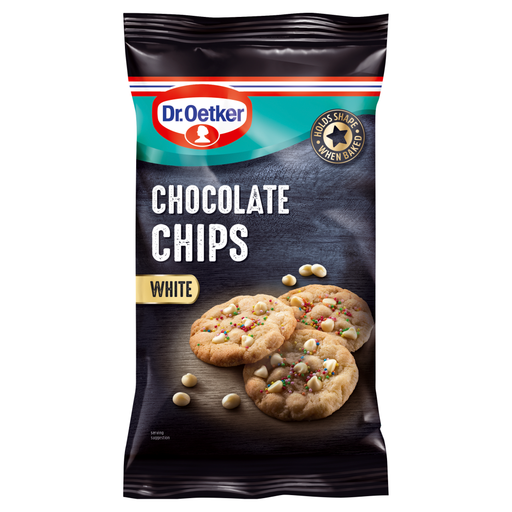
- Why It Stands Out: These white chocolate chips are specifically developed to maintain their structure when baked. This means you get perfectly formed, gooey morsels in every bite of your cookies or muffins, rather than having the chocolate melt away into the batter.
- Pros:
- Engineered to hold their shape in the oven.
- Smooth, creamy chocolate flavour.
- Convenient and ready to use, no chopping needed.
- Can be gently melted for drizzling.
- Who is it for: Home bakers who want to add distinct pieces of white chocolate to cookies, muffins, brownies and scones. They are also a simple, effective decoration for cupcakes and ice cream.
Dr. Oetker White Chocolate 100g
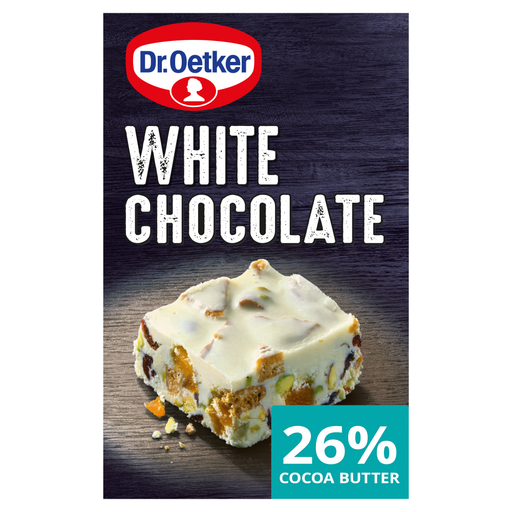
- Why It Stands Out: This Dr. Oetker white chocolate bar is a versatile workhorse for the kitchen. Formulated with 26% cocoa butter, it is designed for superior melting performance, delivering a consistently smooth and creamy texture for coatings and sauces.
- Pros:
- Excellent melting properties for a flawless, smooth finish.
- High cocoa butter content (26%) ensures a quality texture.
- Delicate vanilla flavour that complements other ingredients.
- Made with Rainforest Alliance Certified cocoa.
- Who is it for: Bakers in need of a reliable, meltable white chocolate for creating ganaches, icings, sauces or decorative elements. It's an all-rounder for recipes where a liquid or semi-liquid chocolate is required.
Menier White Cooking Chocolate 100g
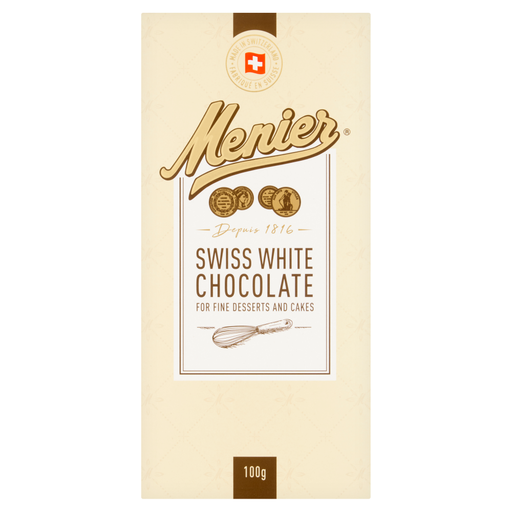
- Why It Stands Out: With a heritage dating back to 1816, Menier is known for its quality. This white cooking chocolate stands apart with its infusion of natural Madagascan vanilla, which provides a more fragrant and nuanced flavour than standard vanilla flavouring.
- Pros:
- Aromatic flavour from authentic Madagascan vanilla.
- Contains a minimum of 27% cocoa solids for a rich, buttery melt.
- Ideal for premium desserts like mousses, cheesecakes and ganaches.
- Sourced from Rainforest Alliance Certified farms.
- Who is it for: The baking enthusiast looking to elevate their desserts with a high-quality chocolate that offers a more refined and aromatic flavour profile. It is particularly well-suited for recipes where the white chocolate flavour is front and centre.
Looking for More Options?
If our recommendations don't quite match your recipe's needs, or if you'd like to explore a wider variety of formats and brands, we have more to see. From different cocoa percentages to larger pack sizes, you can find the perfect ingredient for your next project.
Browse our full collection of white chocolate to find the right fit for your kitchen.
Frequently Asked Questions
1. Can I use regular white chocolate for baking? You can, but it may not yield the best results. Eating chocolate often has a lower cocoa butter content and higher sugar content, which can cause it to burn or become grainy ('seize') when melted. White cooking chocolate is specifically formulated to withstand the temperatures and techniques used in baking for more reliable outcomes.
2. Why does my white chocolate get thick and grainy when I melt it? This is known as seizing. It typically happens for two reasons: overheating or contact with even a tiny drop of water. To prevent this, always melt your meltable white chocolate gently. Use a bain-marie (a dry, heatproof bowl set over a pan of simmering, not boiling, water) and stir until smooth. If using a microwave, heat in short 10-15 second bursts on medium power, stirring between each interval.