
Finding the Right Point: Our Top Pencil Sharpener Recommendations for 2026
A blunt pencil can bring a productive moment to a grinding halt. Whether you are an artist capturing a fleeting detail, a student in the middle of an exam or a professional jotting down crucial notes, a broken or dull point is a universal frustration. With so many options available, from simple manual devices to sophisticated electric models, choosing the right tool can feel surprisingly complex.
As a Joybuy Product Recommendation Officer, my role is to help you find practical solutions that fit your needs. This guide cuts through the clutter, offering clear advice to help you select a reliable pencil sharpener for your home, classroom or office.
How to Choose the Right Pencil Sharpener
Before you make a decision, consider a few key factors. Thinking about how and where you will use your sharpener will ensure you get a tool that performs well for years to come.
1. Electric or Manual: Power vs. Precision
The first major choice is between an electric pencil sharpener and a manual pencil sharpener.
-
Electric sharpeners offer speed and convenience. They are ideal for environments where time is a factor and many pencils need sharpening, such as a classroom or a busy design studio. Many models feature an automatic pencil sharpener function that starts upon insertion and stops once the point is perfect, preventing waste. For ultimate flexibility, a battery operated pencil sharpener provides the power of an electric model without being tethered to a wall socket, making it a great portable pencil sharpener.
-
Manual sharpeners provide greater control over the sharpening process. Artists often prefer them as they can create a specific type of point. They are also incredibly reliable, as they have no electronic parts that can fail. These range from small, pocket-sized sharpeners to robust desktop pencil sharpener models with a hand crank, which are built for stability and frequent use.
2. The Right Sharpener for Your Pencils
Not all pencils are created equal, and the same goes for sharpeners. Using the wrong type can lead to broken leads and damaged pencils.
- Pencil Type: A pencil sharpener for coloured pencils is often a worthwhile investment for artists. Coloured pencils have a softer, waxier core than graphite pencils, which can clog and damage sharpeners with less robust blades. Look for sharpeners with sharp, durable helical blades that shave the wood and core cleanly.
- Pencil Size: Most sharpeners are designed for standard pencils with an 8mm diameter. If you use jumbo pencils, sketching pencils or triangular pencils, check that the sharpener you are considering has a variable-sized opening to accommodate them.
3. Portability and Workspace Integration
Consider where your sharpener will live. If you work at a single desk, a sturdy desktop pencil sharpener is an excellent choice. These models are stable and often have large-capacity containers for shavings, reducing the frequency of emptying. For students, field artists or professionals who move between locations, a compact and portable pencil sharpener is essential. Lightweight manual models or a cordless battery operated pencil sharpener are perfect for stowing in a bag or pencil case.
Our Top Recommendations for 2026
Based on functionality, user convenience and design, here are our recommendations for reliable sharpening.
Dahle 250 Battery Operated Pencil Sharpener 8mm Pink
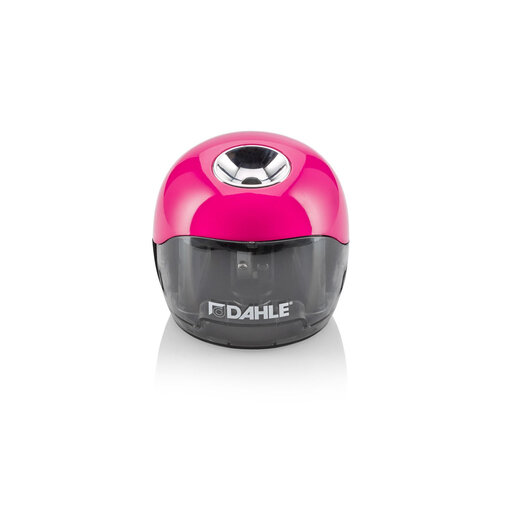
Why It Stands Out This model successfully combines the power of an electric sharpener with the freedom of a portable device. Its battery-powered design means you can achieve a perfect point anywhere, without searching for a power outlet. The automatic sharpening mechanism activates the moment a pencil is inserted, delivering a consistent, sharp tip every time.
Pros
- Cordless and Portable: The battery operation offers complete flexibility for use at any desk, in any room or on the go.
- Automatic Operation: Effortlessly sharpens pencils with a hands-free mechanism, stopping automatically to prevent over-sharpening.
- Versatile Use: Compatible with standard graphite and coloured pencils up to 8mm in diameter.
- Clean and Simple: Features a front-loading, transparent container that is easy to remove and empty.
Who is it for? This is an excellent choice for students, teachers and home office users who need a fast, reliable and portable sharpening solution. Its ease of use makes it particularly suitable for classroom settings or for anyone who values a tidy, cord-free workspace.
Dahle 144 Manual Desktop Pencil Sharpener 8mm Black/Clear
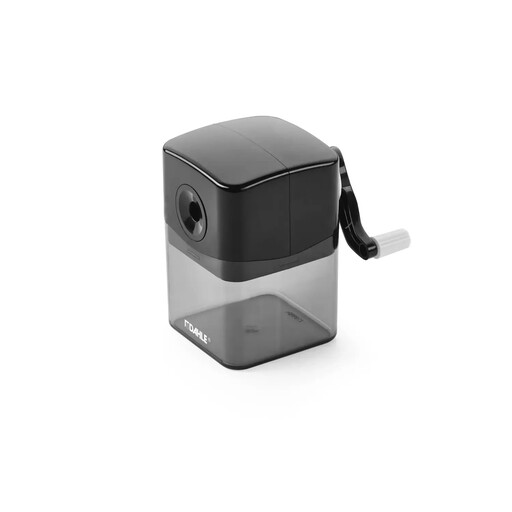
Why It Stands Out This manual desktop sharpener is a testament to classic, reliable design. It offers exceptional precision through its automatic pencil feed, a feature that gently pulls the pencil in as you turn the crank, ensuring an even and consistent point without user error. Its durable construction and professional aesthetic make it a permanent fixture for any serious workspace.
Pros
- Precision Sharpening: The automatic feed mechanism provides a controlled, uniform sharpening action for perfect results.
- Durable Build: Made from a combination of sturdy plastic and metal components, it is designed for long-term, frequent use.
- Desktop Stability: Its compact but solid form ensures it stays put on your desk during operation.
- Easy Maintenance: The clear shavings container lets you see when it needs emptying, and it detaches easily for quick disposal.
Who is it for? Ideal for artists, architects and office professionals who demand precision and control from their tools. It is also a great option for anyone who prefers the dependability and tactile experience of a high-quality manual sharpener.
Keep Your Workspace Tidy
Once your pencils are perfectly sharpened, keeping them and your other writing tools organised is the next step towards an efficient workspace. A cluttered desk can hinder creativity and focus.
If you are looking to create a more orderly and productive environment, explore our selection of pen organisers to find the perfect solution for your desk.
Frequently Asked Questions
1. Can you use an electric sharpener for coloured pencils? Yes, many modern electric sharpeners are suitable for both graphite and coloured pencils. It is best to choose a model with a sharp, helical blade, as this type shaves the pencil's core more gently, reducing the risk of breakage. Always check the product's specifications to confirm compatibility. It is also good practice to empty the shavings container more frequently, as the waxy residue from coloured pencils can build up.
2. How do you stop a pencil sharpener from breaking the lead? Lead breakage is often caused by a dull blade, excessive pressure or a poor-quality pencil. First, ensure your sharpener's blade is sharp; if it is a model with a replaceable blade, consider changing it. If not, it may be time for a new sharpener. When using a manual sharpener, apply gentle, even pressure. For electric models, a feature that automatically stops sharpening when the point is achieved can prevent breakage from over-sharpening.
3. What is the difference between a helical and a single-blade sharpener? The key difference is the cutting mechanism. A single-blade sharpener uses a flat blade to shave the pencil as it is twisted. A helical sharpener features a cylindrical cutter with multiple cutting edges that rotate around the pencil. This mechanism typically produces a sharper, more durable point with a smooth, concave finish and is common in higher-quality desktop and electric models.