
A Home Brewer’s Guide to Buying Ground Coffee in the UK
Navigating the world of ground coffee can feel more complex than it needs to be. With shelves and web pages filled with bags promising unique origins and exotic flavours, it's easy to end up with a coffee that doesn't suit your taste or, worse, your coffee maker. As the Joybuy Product Recommendation Officer, my role is to help you sidestep the common purchasing mistakes and find a coffee that makes your daily brew a genuine pleasure.
Many of us have been there: you buy a bag labelled "dark roast" expecting a rich, bold flavour, only to find it tastes burnt and bitter. Or you invest in a premium "100% Arabica" coffee that ends up being disappointingly weak in your cafetière. These issues often stem from a few common pitfalls.
- The Roast Level Guessing Game: Roast numbers (e.g., 3, 4, 5) are not standardised across brands. A "5" from one roaster might be as intense as a "4" from another, leading to inconsistent results and wasted money on coffee that is either too strong or too mild for your liking.
- The "Universal Grind" Compromise: Many pre-ground coffees are marketed as suitable for all methods. However, the ideal grind size for cafetiere coffee is much coarser than what's needed for filter coffee or an espresso machine. Using the wrong grind leads to poor extraction—either a weak, sour brew or a muddy, bitter one.
- The "100% Arabica" Halo Effect: While Arabica coffee is known for its delicate and aromatic qualities, this label alone is not a guarantee of quality. A well-crafted blend that includes Robusta beans can offer a fuller body and a more stable crema, which is often desirable in traditional Italian ground coffee and espresso blends.
Understanding a few key parameters can transform your coffee buying experience from a game of chance into a confident choice.
Decoding the Bag: What to Look For
Before adding any ground coffee to your basket, focusing on these three factors will ensure you get the flavour and quality you expect.
1. Roast Profile Over Roast Number
Instead of relying solely on a brand's intensity number, pay closer attention to the flavour descriptions. A dark roast coffee should offer notes of chocolate, caramel or nuts, as the roasting process mutes acidity and develops deeper, sweeter flavours. A medium roast coffee typically provides a balance between acidity, body and aroma, often with fruity or floral notes. Look for specific descriptors like "hints of cocoa and brown sugar" or "notes of citrus" to guide your purchase.
2. Bean Type and Origin
The two most common types of coffee beans are Arabica and Robusta.
- Arabica: Generally grown at high altitudes, these beans have higher acidity and a more complex, aromatic flavour profile. Single-origin Arabica coffees, like those from Ethiopia, can have distinct floral or berry notes.
- Robusta: As the name suggests, this is a hardier plant with a bolder, stronger flavour and roughly twice the caffeine content of Arabica. It's prized in espresso ground coffee blends for its ability to produce a thick, stable crema.
Many classic Italian blends combine both to achieve a balanced, full-bodied cup. Don't dismiss a blend just because it isn't 100% Arabica; it may be expertly crafted for a richer experience.
3. Grind Size and Brewing Method
This is non-negotiable for a good cup. The packaging should ideally state which brewing method the coffee is ground for.
- Coarse Grind: Best for a cafetiere (French press). The larger particles prevent over-extraction and stop sediment from passing through the mesh filter.
- Medium Grind: The standard for drip filter coffee machines and pour-overs. This size allows for a balanced extraction rate.
- Fine Grind: Required for moka pots and espresso machines, where water is forced through the coffee under pressure. Using a coarser grind here will result in a weak, watery shot.
Top Ground Coffee Recommendations
To help you find a suitable match, here are several options aligned with different preferences and brewing habits.
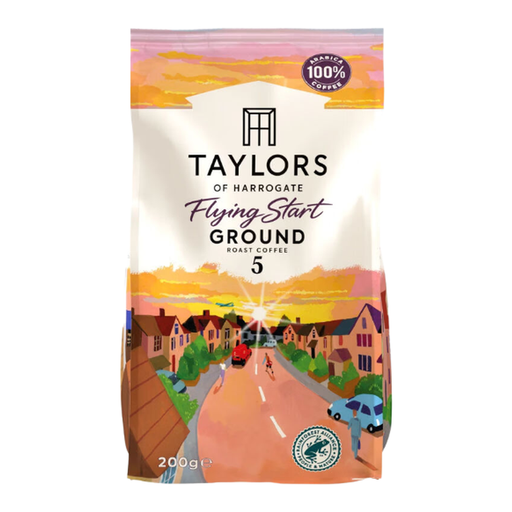
Taylors of Harrogate Flying Start Ground Coffee 200g
Why This Fits Their Persona: This coffee is designed for those who need a reliable, no-fuss start to their day. It's a balanced and smooth blend that works well for a quick brew in a cafetière or filter machine before the morning commute.
It avoids the "universal grind" pitfall by being pre-ground to a versatile medium consistency that is explicitly stated to work well in both filter machines and cafetières, two of the most common home brewers.
A consistently smooth and well-rounded profile without excessive bitterness. Ethically sourced from Rainforest Alliance Certified farms.
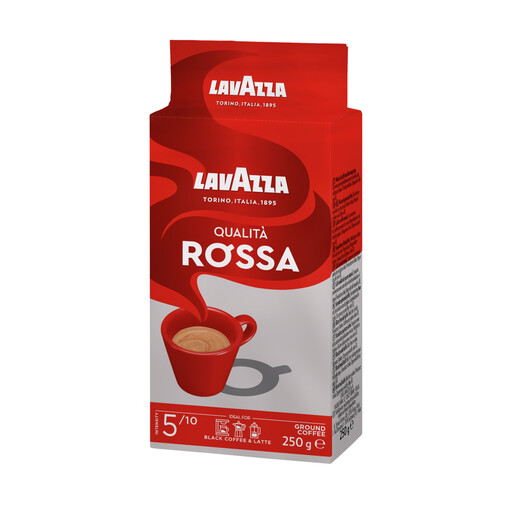
Lavazza Qualità Rossa Ground Coffee 250g
Why This Fits Their Persona: For those who love the authentic taste of an Italian café, Qualità Rossa is a staple. It's perfect for making a strong, aromatic coffee in a moka pot to enjoy as a ristretto or lungo.
This blend of Arabica and Robusta beans challenges the "100% Arabica" myth by delivering the rich body and golden crema that Robusta provides, which is essential for an authentic Italian-style coffee.
A truly versatile Italian ground coffee that performs well in moka pots, filter machines and French presses. It has a full, rounded taste with notes of chocolate.
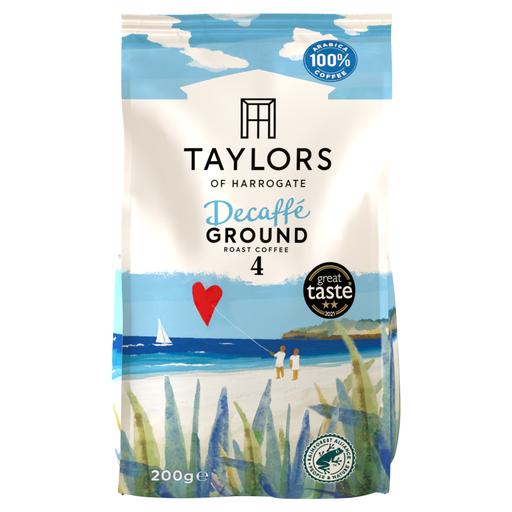
Taylors of Harrogate Decaf Ground Coffee 200g
Why This Fits Their Persona: Ideal for those who love the ritual and flavour of coffee but want to avoid caffeine, whether for an evening cup or for health reasons. This blend offers a full coffee experience without the stimulant effect.
It addresses the common concern that decaf coffee is flavourless. The clear flavour profile of "smooth caramel and malt" and its Great Taste Award show that this decaf ground coffee is crafted for enjoyment, not just caffeine removal.
Decaffeinated using a natural water method, avoiding chemical solvents. It's a 100% Arabica blend, offering a smooth and balanced flavour.
Looking for More Options?
We have compiled a complete, real-time list of products that fully satisfy these strict selection criteria and UK safety regulations.
Frequently Asked Questions
How long does ground coffee stay fresh?
Ground coffee loses its aroma and flavour much faster than whole beans. Once a bag is opened, it's best to store the coffee in an airtight container in a cool, dark cupboard. For the freshest taste, try to use it within one to two weeks. Avoid storing it in the fridge, as condensation can affect the flavour.
Can I use espresso ground coffee in a cafetière?
It is strongly advised against. The fine grind required for espresso will likely pass through the cafetière's metal filter, resulting in a cup full of unpleasant sediment. Furthermore, the large surface area of the fine grounds will lead to over-extraction during the long steep time, making the coffee taste excessively bitter.
What is the real difference between Arabica and Robusta?
The main differences are in taste, caffeine content and growing conditions. Arabica coffee beans are known for their aromatic complexity and higher acidity, with flavour notes that can range from fruity to floral. They are more delicate to grow. Robusta beans have a bolder, more traditional "coffee" flavour, lower acidity, and about double the caffeine. They are often included in espresso ground coffee blends to produce a rich, stable crema—the reddish-brown foam on top of an espresso shot.