
Choosing the Right Baby Cups in the UK: A Parent's Guide
Navigating the world of baby cups can feel like a minefield. The shelves are packed with options, each promising to be the perfect solution for your little one. Yet, as many UK parents discover, the reality often involves soggy nappy bags, cupboards overflowing with rejected cups and a constant battle with hard-to-clean parts. Before you make another purchase, it's worth understanding the common pitfalls that lead to wasted money and frustration.
Many parents are drawn in by two major marketing traps. The first is the "100% leak-proof" promise that rarely holds up to a toddler's determination. The second is the "one-size-fits-all" fallacy; a cup designed for a six-month-old learning to sip is fundamentally different from one needed by an active two-year-old. A third, often overlooked issue, is the "easy-clean" claim on cups with so many tiny, intricate parts they become a breeding ground for mould. Choosing the right cup isn't about finding one perfect product, but about matching the right design to your child's specific developmental stage.
Decoding the Jargon: Key Features to Look For
To make an informed choice, it helps to understand the core features that truly matter. Focusing on these parameters will help you select a cup that is safe, practical and supports your child's development.
Cup Type vs. Your Child's Age
The type of cup you choose should align with your child's age and motor skills.
- Open Cups (3+ months): Often recommended by health professionals as the first cup for weaning. Specially designed open cups, sometimes with a slanted rim, teach a baby to sip rather than suck, which is excellent for oral and facial development. They require full adult supervision.
- Trainer Cups (4-9 months): These are the classic sippy cups, typically featuring two handles and a spout. A cup with handles for baby helps develop grip and hand-eye coordination. Look for soft spouts that are gentle on sensitive gums.
- Straw Cups (6+ months): A straw cup for baby is another great option that encourages different mouth muscle development. Some feature weighted straws, allowing the child to drink from any angle.
- 360 Cups (6+ months): These clever designs have a valve that allows a child to drink from anywhere around the rim, mimicking an open cup without the spills. A 360 cup is an excellent transitional tool.
- Toddler Cups / Beakers (12+ months): For older, more active toddlers, you'll find larger, more robust toddler cups and baby beakers, often with harder, bite-resistant spouts and larger capacities to ensure they stay hydrated.
Spill-Proof vs. Free-Flow: What's the Difference?
This is one of the most important distinctions. A non-spill cup contains a valve that only opens when the child sucks on the spout or straw. This is ideal for preventing messes, especially when out and about. In contrast, a free-flow cup allows liquid to flow freely when the cup is tipped, much like a regular cup. While messier, free-flow spouts are often recommended by dentists and speech therapists as they help a child learn to sip and control the flow of liquid, which is a crucial skill for transitioning to an open cup.
Materials and Cleaning: The Non-Negotiables
Safety and hygiene are paramount. Always ensure any cup you buy is explicitly labelled as BPA-free. The main body of most cups is made from durable polypropylene, while spouts and straws are typically silicone. Soft silicone is gentler for young babies, while older toddlers with teeth may need a more bite-resistant material. Finally, consider the cleaning process. The fewer tiny parts, the better. Look for cups that can be fully disassembled and are marked as top-rack dishwasher safe for true convenience.
Top Baby Cups to Consider
Instead of a single "best" cup, we match specific designs to the parents and children they are built for. Here are a few recommendations based on common UK household needs.
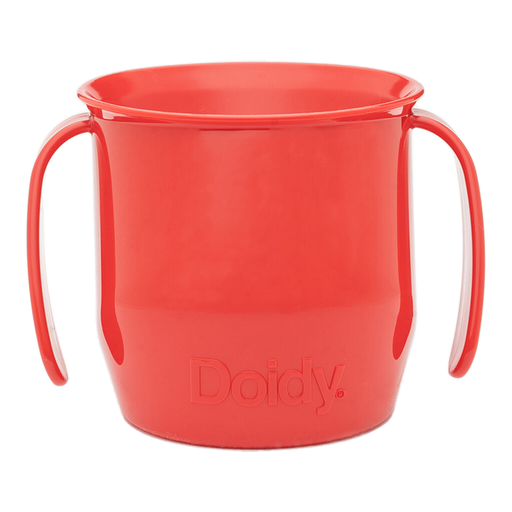
Doidy Cup 3+ Months Red
Why This Fits Their Persona: This cup is specifically for the very first stage of weaning. Its unique slanted design allows a baby to see the liquid and learn to drink from an open rim without tilting their head back, supporting natural oral development from day one.
It sidesteps the "one-size-fits-all" trap by being a specialist first cup for weaning. It's not trying to be a do-it-all toddler beaker; it excels at one crucial job.
Promotes healthy jaw and tongue movements similar to breastfeeding. It is frequently recommended by UK health professionals for this reason.

Munchkin Miracle 360° Cup 6+ Months 207ml (Assorted)
Why This Fits Their Persona: Ideal for parents who dread cleaning up constant spills. The 360-degree edge seals automatically after sipping, making it a reliable non-spill cup for use around the house as your baby starts to move and explore.
It tackles the "leak-proof" myth with a practical design. Its pressure-sensitive seal is one of the more effective solutions for preventing major leaks from knocks and drops at home.
The spoutless design is dentist-recommended for supporting oral development, and it is very easy to clean with just two simple parts.
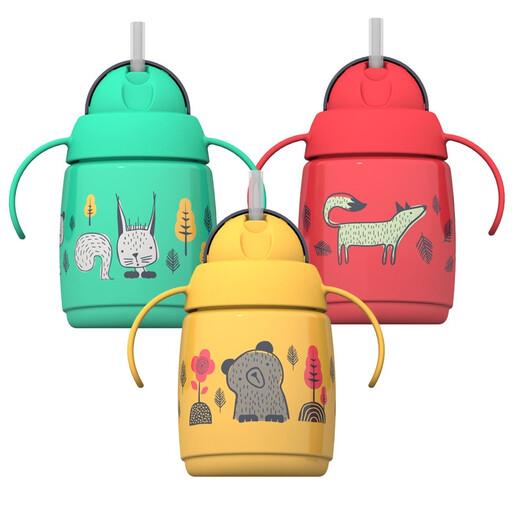
Tommee Tippee Superstar Training Straw Cup Leak & Shake-Proof 6+ Months 300ml Assorted
Why This Fits Their Persona: Perfect for busy days out, nursery and travel. Its larger capacity, weighted straw for drinking at any angle, and robust anti-leak technology make it a reliable choice for stashing in a nappy bag without fear of major spills.
It directly addresses the "leak-proof" claim with specific, named technology (INTELLIVALVE). The weighted straw also solves the common frustration of toddlers not being able to get the last drops of liquid.
Features a weighted straw for any-angle drinking and includes antibacterial technology in the straw for added hygiene on the go. It also comes with a cleaning brush for the straw.
Looking for More Options?
We have compiled a complete, real-time list of products that fully satisfy these strict selection criteria and UK safety regulations.
Frequently Asked Questions
1. At what age should I introduce a baby cup? Most health professionals in the UK, including the NHS, recommend introducing a cup from around 6 months of age to coincide with the start of weaning. An open cup or a free-flow cup is often suggested to help your baby learn to sip, which is better for their teeth and oral development than prolonged bottle use.
2. Are straw cups or sippy cups better for toddlers? Both have their place. Traditional sippy cups with hard spouts can sometimes encourage an immature sucking pattern. In contrast, straw cups and spoutless 360 cups are often favoured by dentists and speech therapists because they promote a more mature sipping pattern, using the lips, tongue and jaw in a way that is more beneficial for muscle development and speech. However, a soft-spout sippy cup can be a good initial trainer cup before moving on.
3. How often should I replace my baby's cup? There is no fixed timeline, but you should inspect cups before every use. Check for cracks in the plastic, bite marks on the spout or straw and signs of wear on the valves. If a valve is damaged, the cup will no longer be spill-proof. If a spout or straw is bitten through, it can become a choking hazard. It's good practice to replace cups or their soft parts (spouts, straws) every few months, or immediately if you see any signs of damage or weakness.