
Choosing a Balance Bike: Our Top Recommendations for 2026
Watching your child take their first steps towards riding a bike is a memorable moment. But with so many options, from tricycles to bikes with stabilisers, it can be difficult to know where to start. A balance bike, often called a no pedal bike, offers a fantastic way for toddlers to develop the core skills of balance and coordination at their own pace, making the eventual transition to a pedal bike much smoother.
As your Joybuy Product Recommendation Officer, my role is to help you navigate the market. This guide cuts through the clutter to provide practical advice and highlight a few standout options, helping you find a safe and enjoyable first ride for your little one.
How to Choose the Right Balance Bike for Your Child
Before looking at specific models, consider these key features to ensure you select a suitable kids balance bike.
1. Sizing and Adjustability
The most important factor is fit. A child should be able to sit on the saddle with their feet flat on the ground and a slight bend in their knees. This allows them to push off and stop with confidence.
- Measure Inseam: Age guides are helpful, but a child's inseam (the measurement from the floor to their crotch) is more accurate. Compare this to the bike's minimum and maximum seat height.
- Look for Adjustability: A bike with an adjustable seat and handlebars will grow with your child, offering better value and a comfortable fit for longer. This is especially important when choosing a
balance bike for a 2 year old, as they grow so quickly.
2. Frame Material and Weight
A lightweight balance bike is much easier for a small child to control, manoeuvre and pick up after a tumble. It's also easier for you to carry home from the park.
- Steel Frames: These are very durable and robust, built to withstand plenty of enthusiastic use. They are often a more affordable option.
- Magnesium or Aluminium Frames: These materials offer a significant weight reduction without compromising strength, making the bike feel much lighter and more manageable for a toddler.
3. Tyres: Puncture-Proof vs. Air-Filled
The tyres affect the ride quality and maintenance requirements.
- EVA Foam Tyres: These are solid, puncture-proof and require no maintenance. They are ideal for riding on smooth surfaces like pavements and indoor floors.
- Pneumatic (Air-Filled) Tyres: Similar to those on adult bikes, these offer better grip and cushioning, providing a smoother ride on more varied terrain like grass or bumpy paths. They do, however, require occasional inflation and can be punctured.
Our Top Balance Bike Recommendations for 2026
Here are a few recommendations from our current selection that cater to different needs and preferences.
Stitch 12 inch Balance Bike with Light Up Wheels
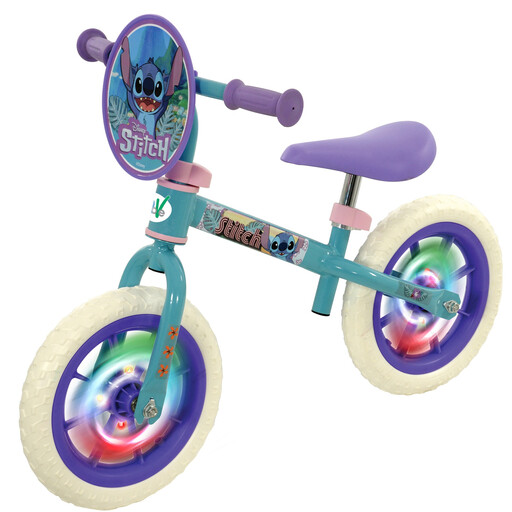
Why It Stands Out: The combination of the beloved Disney Stitch character and motion-activated light-up wheels makes this bike a standout choice for encouraging reluctant riders. The visual excitement of the lights adds a dose of fun to every journey.
Pros:
- Engaging Design: Officially licensed Disney Stitch theme is a huge draw for young children.
- Light-Up Wheels: Motion-activated LED wheels create a fun visual effect without needing batteries.
- Durable Build: Features a durable steel frame and puncture-proof EVA tyres.
- Adjustable: Both the seat (35-40cm) and handlebars (50-55cm) are adjustable to accommodate growth.
Who is it for?: Perfect for young Disney fans from age 2 who will be captivated by the fun, interactive features. It's a great motivator to get outside and practise their balancing skills.
HOMCOM 11 Inch Kids Balance Bike with Removable Stabilisers
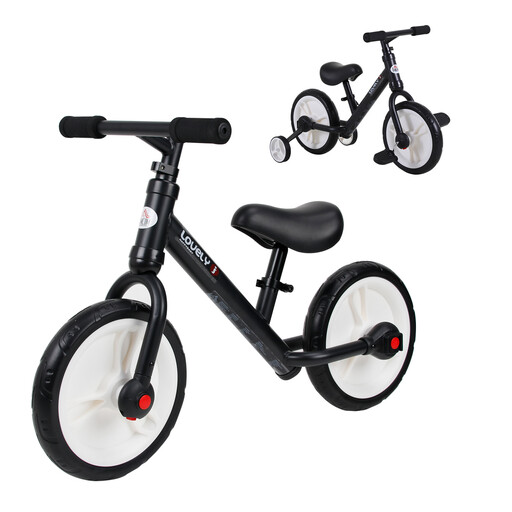
Why It Stands Out: This unique training bike offers a 2-in-1 design. It functions as a standard balance bike but also includes removable stabilisers and pedals, providing a transitional stage for learning to pedal once balance is mastered.
Pros:
- Versatile 2-in-1 Function: Can be used as a balance bike and then converted to a small pedal bike.
- Grows with the Child: The adaptable design and adjustable seat height (33-38cm) provide long-term use.
- Solid Construction: Built with a low-slung metal frame for easy access and non-slip EVA tyres for a safe ride.
Who is it for?: A practical option for parents looking for a single product that can adapt as their child gains confidence and is ready to learn pedalling, suitable for ages 2 to 5.
RoyalBaby Dinosaur 12 inch Balance Bike
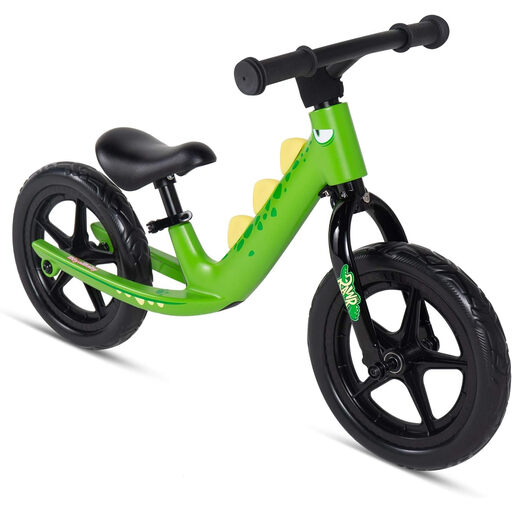
Why It Stands Out: Constructed from an impressively light magnesium alloy, the RoyalBaby Dinosaur model is exceptionally easy for little ones to handle and for parents to carry. The thoughtful design includes features like widened footrests for gliding.
Pros:
- Ultra-Lightweight Frame: The magnesium alloy frame makes this one of the lighter options available, boosting a child's confidence.
- Child-Friendly Design: Features a fun dinosaur theme, a steering limiter for controlled turning and no sharp edges.
- Comfort Features: Includes widened footrests for coasting and a quick-release adjustable seat.
- Maintenance-Free: Comes with puncture-proof EVA tyres that never need inflating.
Who is it for?: An excellent choice for families who prioritise a very lightweight balance bike. It's ideal for dinosaur-loving kids aged 3 to 5 and offers a premium feel.
Looking for More Options?
If these specific models aren't quite what you're looking for, we have a wider selection to suit every child, budget and preference. Explore our full collection to find the perfect match for your little rider.
Explore All Balance Bikes on Joybuy UK
Frequently Asked Questions about Balance Bikes
1. What age is a balance bike for? While many children start on a balance bike for 2 year old, the typical age range is between 18 months and 5 years. The most important factor is not age, but the child's physical size and coordination. Always check the manufacturer's recommended height and ensure your child's inseam allows their feet to rest flat on the ground.
2. Are balance bikes better than stabilisers? They teach different skills. A balance bike focuses on the hardest part of riding first: balance and steering. Children learn to control the bike and stay upright intuitively. Stabilisers teach a child to pedal, but they prevent them from learning to balance, which can make the final transition to a two-wheeler more challenging.
3. Do toddler balance bikes need brakes? For the youngest riders (under 3), their feet are the most effective and intuitive brakes. They can easily put their feet down to slow down or stop. Some balance bikes designed for older, more confident children (3+) include a handbrake. This can be a useful feature for teaching the concept of hand-braking before they move on to a larger pedal bike.