
A Parent’s Guide to Choosing the Right Baby Walker
Watching your little one take their first wobbly steps is a milestone filled with excitement and anticipation. As they build strength and curiosity, you may be considering a baby walker to support their journey towards independent movement. With so many options available, from traditional sit-in models to versatile push-alongs, finding the right one can feel overwhelming.
This guide is designed to help you navigate the choices. We will outline key features to consider, from safety standards to developmental benefits, and provide some practical recommendations to help you find a mobility aid that suits your child and your home.
What to Look for in a Baby Walker
Choosing a walker is about more than just bright colours and fun sounds. Here are a few practical points to consider to ensure you are selecting a safe and suitable option for your child.
1. Safety and Stability are Paramount
In the UK, all baby walkers must comply with stringent safety standards (BS EN 1273:2020). These regulations ensure the product is stable and includes features to prevent common accidents. When comparing models, look for a wide, sturdy base that prevents tipping. Many walkers also include anti-tip safety pads or friction strips underneath, which are designed to stop the walker at the edge of a step or an uneven surface. Always check that these features are present and functional.
2. Adjustability for Growing Babies
Babies grow quickly, and a walker should be able to adapt with them. An adjustable baby walker with multiple height positions is essential. This ensures your baby’s feet can rest comfortably on the floor in the correct position to push off, promoting proper posture and movement. A walker that is too high or too low can be uncomfortable and less effective. Some models offer even greater longevity, converting from a sit-in frame to a sit to stand walker that your child can use as they become more confident.
3. Engagement and Practicality
While the primary purpose is mobility, a good baby activity walker can also provide valuable sensory stimulation. Features like a musical walker with lights, sounds and interactive toys can help develop fine motor skills and keep your baby entertained. For parents, practicality is just as important. Look for a foldable baby walker if you are short on space or need to transport it. Removable, washable seat covers and easy-to-clean snack trays are also features that busy families will appreciate.
Recommended Baby Walkers to Consider
Here are a few options that balance safety, functionality and long-term value for families.
Mychild Wizzy Walker Grey
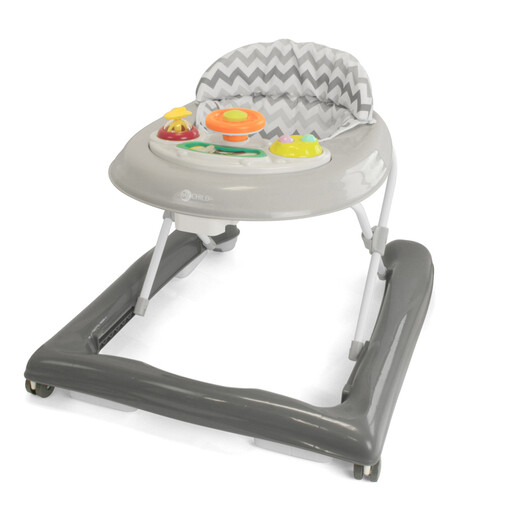
Why It Stands Out: The Mychild Wizzy Walker is a classic sit-in walker designed with modern practicality in mind. Its standout feature is the ultra-compact fold, making it an excellent choice for homes where storage space is at a premium. The interactive play tray provides engaging activities to keep your baby occupied as they explore.
Pros:
- 3-Position Height Adjustment: Grows with your baby to ensure a comfortable fit.
- Interactive Play Tray: Features a steering wheel, horn, lights and melodies to stimulate senses. The tray is also detachable for floor play or to create a simple snack tray.
- Compact & Foldable: Folds completely flat for easy storage and portability.
- Safety Features: Equipped with anti-tip pads and a high-back padded seat for support.
Who is it for: Parents looking for a reliable and engaging sit-in walker that is easy to store away. It is ideal for babies who can sit unaided (from approx. 6 months) and need a secure space to practise moving.
4-in-1 Baby Push Walker with Adjustable Height and Speed
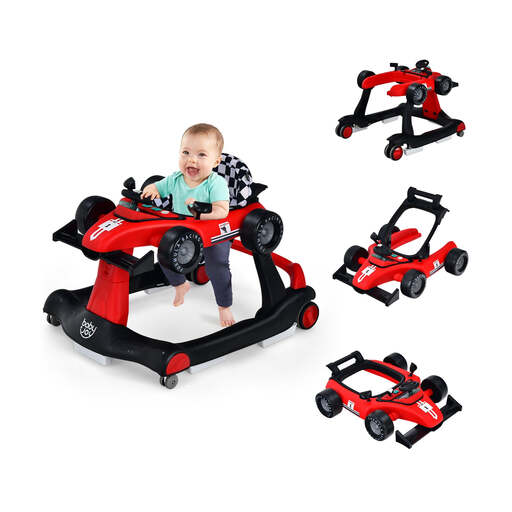
Why It Stands Out: This walker offers exceptional versatility, transforming through four different modes to support your child’s development over time. It starts as a traditional baby walker and converts into a baby push walker, a push car and a rolling toy car, providing excellent long-term play value.
Pros:
- 4-in-1 Design: Adapts from a walker to a push-along toy, extending its use well beyond the initial walking phase.
- Adjustable Height and Speed: Features three height settings and adjustable rear wheels to control the walking pace, allowing you to customise it to your child's ability.
- Engaging Car Theme: The steering wheel, shifter and music box with lights create a fun, immersive experience for little ones.
- Safety Focused: Built with anti-slip stair pads and a rear safety bumper for added security.
Who is it for: Families who want a multi-functional product that offers more than just a standard walker. Its ability to transition into a push toy makes it a great investment for toddlers learning to walk and play.
HOMCOM 6-in-1 Trike with Push Handle
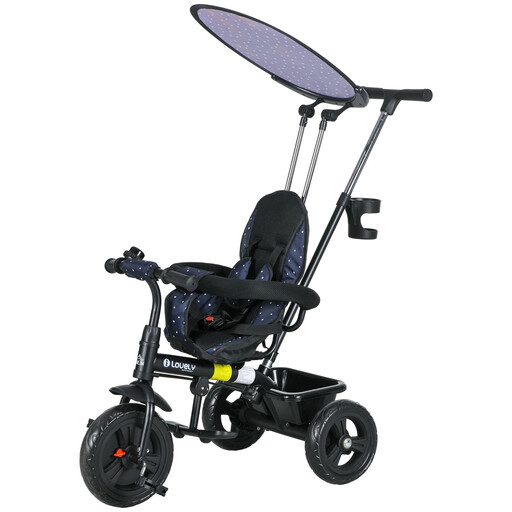
Why It Stands Out: While not a traditional walker, this 6-in-1 trike is an excellent alternative for parents seeking a long-term mobility solution. It functions as a toddler trike with a parent handle, allowing you to guide your child securely before they are ready to pedal on their own. It adapts through six stages, growing with your child from 12 months to 5 years.
Pros:
- Exceptional Longevity: Transitions from a parent-pushed stroller to an independent tricycle, offering years of use.
- Parent-Friendly Control: The long push handle allows for easy steering, giving you full control during walks.
- Comfort and Security: Comes with a 5-point safety harness, a comfortable high-back seat and a removable canopy for sun protection.
- Practical Features: Includes a storage basket for toys and snacks, making it perfect for trips to the park.
Who is it for: Parents looking for a versatile, long-lasting product that supports a child's mobility from their first seated adventures right through to independent pedalling.
Looking for More Playtime Inspiration?
Every child's developmental journey is unique, and finding the right toys to support them is key. If you are searching for other engaging options to encourage movement and imaginative play, you may find the perfect fit in our wider collection.
For more engaging options that support your toddler's development, explore our full collection of Girls Toddler Play Toys.
Frequently Asked Questions About Baby Walkers
1. At what age can a baby use a walker? A sit-in baby walker is generally intended for a child who can already sit up confidently on their own, which is typically around 6 months of age. It is crucial to stop using the walker once your child can walk independently or exceeds the manufacturer's weight limit (often around 12kg). Always refer to the specific product's guidelines.
2. Are baby walkers safe? When used correctly and under supervision, modern baby walkers sold in the UK are designed with safety as a priority. They must meet the BS EN 1273:2020 standard, which includes tests for stability and features to prevent falls on stairs. To ensure safety, always use the walker on a flat surface, away from stairs, fires and electrical cables. Most importantly, never leave a child unattended in a walker.
3. What is the difference between a baby walker and a push walker? A traditional baby walker is a device that a baby sits inside, using their feet to move the frame around. In contrast, a baby push walker (also known as a sit to stand walker) is a toy that a child stands behind and pushes forward. Push walkers are designed for toddlers who are already pulling themselves up and learning to balance, helping them gain confidence before walking unaided.