
Automotive Circuit Testers: A Practical Buyer’s Guide
Diagnosing an electrical fault in a modern vehicle can be a frustrating exercise. A flickering dashboard light, a non-responsive component or a mysterious battery drain can lead to hours of guesswork, tracing wires through complex looms. For professional mechanics and serious DIY enthusiasts, having the right diagnostic tool is not a luxury—it is a necessity for efficient and accurate repairs.
An automotive circuit tester is a fundamental piece of equipment that moves beyond the capabilities of a standard multimeter. It allows you to not only measure voltage but also to actively test circuits, identify breaks and locate shorts. This guide is designed to help you understand the key features to look for and to highlight some of our top recommendations for 2026, enabling you to choose the right tool for your workshop or garage.
What to Look for in a Car Electrical Tester
Navigating the market for a new car electrical tester can be challenging. To make an informed decision, consider these practical points before you buy.
1. Voltage Compatibility and System Range
The first consideration is the type of vehicles you work on. Most cars and light vans use a 12V circuit tester, but lorries, agricultural machinery and some larger vehicles operate on 24V systems. A versatile tool should be rated for both 12V and 24V systems to provide maximum flexibility. Furthermore, look for a wide testing range, such as 0-65V, which is crucial for safely diagnosing the sensitive electronic control units (ECUs) found in modern cars.
2. Core Diagnostic Functions
A basic automotive voltage tester simply confirms the presence of power. A comprehensive tool, often referred to as a power probe, offers much more. Key functions to look for include:
- Short and Open Circuit Finding: An effective automotive short circuit finder or car wire tracer uses a transmitter and receiver to help you follow a wire's path and pinpoint the exact location of a break or short without needing to strip insulation.
- Component Activation: The ability to supply a small amount of power or ground directly to a component (like a fan, motor or light) allows you to test its function in isolation.
- Continuity and Resistance Testing: Essential for checking the integrity of wires, switches and sensors.
- Relay Testing: Some advanced models include a dedicated relay tester function, saving you the time and expense of a separate tool.
3. Design and Usability
In a busy workshop, practicality is paramount. A long power cable (20ft or more) is essential for reaching from the battery to the rear of a vehicle. A flexible probe tip helps access wires in congested engine bays or behind dashboards. Clear, easy-to-read displays—whether a bright LCD screen or simple LED indicators with audible tones—ensure you can interpret results quickly and accurately.
Recommended Automotive Circuit Testers
Based on functionality, versatility and user-focused design, here are our recommendations for your consideration.
VDIAGTOOL V200 Pro: The Comprehensive All-in-One Solution
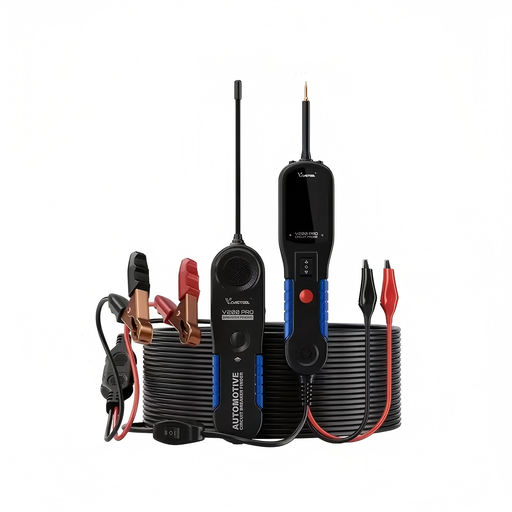
Why It Stands Out: The VDIAGTOOL V200 Pro is a multi-function power probe designed to be the central diagnostic tool for any electrical issue. Its ability to handle everything from AC/DC voltage tests to activating components makes it a true workhorse. The impressive 40-foot extension cable provides exceptional reach, making it suitable for cars, RVs, trucks and even boats.
Pros:
- Wide voltage range of 0-65V and support for both 12V and 24V systems.
- Comprehensive test modes: AC/DC voltage, resistance, diode, continuity and signal circuit testing.
- Activates components directly for functional verification.
- Includes functionality for testing fuses, trailer lights and relays.
Who is it for? This tool is geared towards professional mechanics, auto electricians and fleet maintenance technicians who require a single, robust device to diagnose a vast array of electrical faults across different vehicle types.
VDIAGTOOL V210: A Focused Automotive Short Circuit Finder
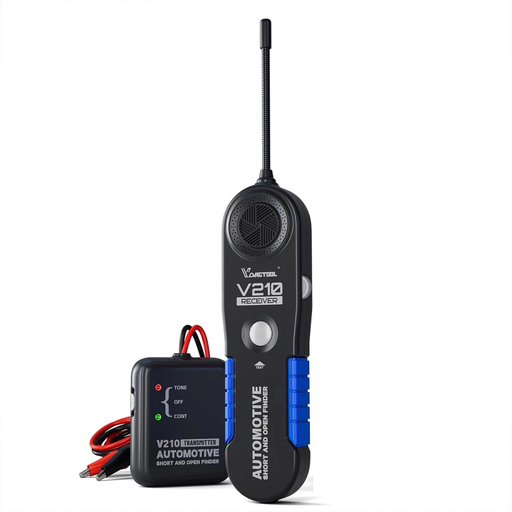
Why It Stands Out: While the V200 Pro is an all-rounder, the VDIAGTOOL V210 excels as a specialised car wire tracer. It is designed specifically for one of the most time-consuming tasks: locating open circuits and shorts. Its battery-powered operation and flexible probe allow you to trace wires deep within the vehicle's structure, listening for a change in the audible tone to pinpoint the fault.
Pros:
- Dedicated open and short circuit detection with clear LED and audible alerts.
- The 6.7-inch flexible probe provides excellent access to congested areas.
- Simple two-mode operation (TONE for tracing, CONT for continuity).
- Battery-powered receiver offers freedom of movement around the vehicle.
Who is it for? Ideal for technicians and advanced DIYers who need a reliable and efficient tool specifically for tracing wires and finding breaks. It serves as an excellent companion to a primary multimeter or power probe.
An Essential Addition to Your Vehicle Toolkit
While diagnosing electrical faults is critical, preventative maintenance is equally important for vehicle reliability. A tool that often gets overlooked, yet is fundamental to safety and performance, is a portable tyre inflator.
Baseus Super Mini Inflator Pump

Why It Stands Out: The Baseus Super Mini Inflator Pump is a compact yet powerful device that ensures your tyres are always at the correct pressure. Proper tyre pressure is vital for safety, fuel efficiency and tyre longevity. Its small size means it can be stored easily in a glove compartment, ready for routine checks or roadside emergencies.
Pros:
- Ultra-compact and portable design.
- Powered by the vehicle's 12V DC outlet.
- Features a clear digital pressure gauge for accurate inflation.
- Includes a bright LED light for use in low-light conditions.
Who is it for? Every driver. Whether you are a professional mechanic advising clients on vehicle care or a daily commuter, this tool is an indispensable part of any car's emergency kit.
Looking for More Options?
The tools highlighted here cover a range of common diagnostic and maintenance needs. However, every workshop and every job is different. If you are searching for other specialised tools, replacement parts or wiring components, we invite you to browse our complete collection.
For a wider selection of diagnostic tools and accessories, explore our full range of electric power cable products.
Frequently Asked Questions
1. What's the difference between a multimeter and an automotive circuit tester? A standard multimeter is a passive measurement device used to read voltage, resistance and current. An automotive circuit tester, particularly a power probe style tool, is an active diagnostic device. It can do everything a multimeter can, but it can also supply power and ground to test components, lights and motors directly, making diagnostics much faster.
2. Can I use a 12V circuit tester on a 24V system? You should only use a circuit tester on a voltage system for which it is explicitly rated. Using a tool designed only for 12V on a 24V system can permanently damage the tester and may even harm the vehicle's sensitive electronics. Always check the product specifications. Tools like the VDIAGTOOL V200 Pro are designed to work safely on both 12V and 24V systems.
3. How does an automotive short circuit finder work? Most models, like the VDIAGTOOL V210, use a two-part system. A transmitter is connected to the faulty circuit, sending a signal along the wire. You then use a handheld receiver to trace the path of the wire. The receiver emits an audible tone or visual signal that changes or stops when it passes over the break or short, allowing you to identify the fault's location without having to physically inspect the entire length of the wire.