
Our Top Recommendations for 4K 240Hz QD-OLED Monitors in 2026
If you've invested in a high-performance gaming PC with a latest-generation graphics card or a PlayStation 5, you understand that your display is the final, critical piece of the puzzle. The search for a monitor that delivers both blistering speed and breathtaking image quality has led many to the latest frontier: the 4K 240Hz QD-OLED monitor. This new class of display promises to eliminate the compromise between resolution, refresh rate and colour fidelity.
As a Joybuy Product Recommendation Officer, my role is to help you navigate the technical specifications and marketing claims. This guide offers practical advice and highlights some of the standout models available, helping you find a display that truly complements your high-end setup.
Choosing Your Next-Generation Display: Key Considerations
Before diving into specific models, it's useful to understand the technology that sets these monitors apart. Here are a few key points to consider during your search.
1. Understanding QD-OLED Technology
You may be familiar with OLED's ability to produce perfect blacks and infinite contrast by controlling each pixel individually. QD-OLED, or Quantum Dot OLED, enhances this by adding a layer of quantum dots. This technology allows for higher peak brightness and a wider, more vibrant range of colours compared to some traditional OLED panels. For users, this translates to a more impactful high refresh rate HDR monitor experience in games and greater accuracy for creative work, making it an excellent choice for a combined monitor for content creation and gaming.
2. Connectivity for Maximum Performance
To unlock the full potential of a 4K 240Hz QD-OLED monitor, the right connection is non-negotiable. For PC gamers, a DisplayPort 1.4 connection that supports Display Stream Compression (DSC) is essential to transmit the vast amount of data required for 4K resolution at a 240Hz refresh rate. For console gamers, an HDMI 2.1 monitor for PS5 or Xbox Series X is crucial to enable 4K gaming at up to 120Hz, the current maximum for these platforms. Always check that the monitor includes these modern ports.
3. Panel Care and Longevity
OLED technology's primary concern has historically been the potential for image retention or "burn-in." Manufacturers of modern QD-OLED panels have addressed this with sophisticated hardware and software solutions. Look for models that feature custom heatsinks, graphene cooling films and integrated software functions like Pixel Shifting and Static Screen Detection. These features actively work to protect your investment and ensure the panel's longevity.
Our Top Recommendations for 4K 240Hz QD-OLED Monitors in 2026
Here are a few noteworthy 32 inch 4K QD-OLED models that exemplify the current state of display technology.
Samsung Odyssey Gaming OLED G8 LS32DG802SUXXU
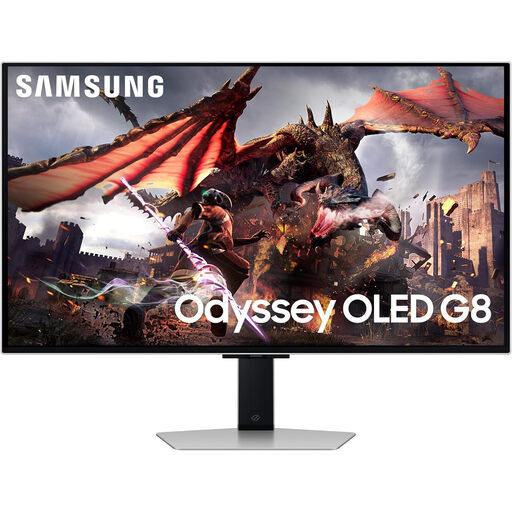
Why It Stands Out: The Samsung Odyssey G8 positions itself as more than just a monitor; it's a complete smart entertainment hub. Powered by the same Tizen OS found in Samsung's TVs, it offers built-in access to streaming apps and the Samsung Gaming Hub. Its NQ8 AI Gen3 processor introduces intelligent features that optimise picture and sound, while the OLED Glare Free technology is a practical addition for bright rooms.
Pros:
- 4K UHD QD-OLED display for exceptional contrast and colour.
- Ultra-fast 240Hz refresh rate and 0.03ms (GtG) response time.
- Integrated Smart TV platform and Gaming Hub for all-in-one entertainment.
- Advanced cooling system and glare-free screen technology.
Who is it for?: The gamer and media enthusiast who wants a single, high-performance display for their PC, console and streaming needs, without requiring external devices.
Alienware 32 4K QD-OLED Gaming Monitor - AW3225QF
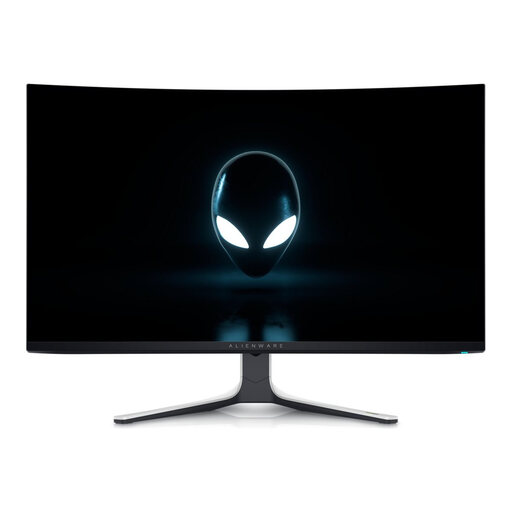
Why It Stands Out: Alienware's AW3225QF is built with a singular focus on immersive gaming. It features a subtle 1800R curvature, designed to enhance peripheral vision and draw you deeper into the action. Combined with its signature AlienFX RGB lighting and robust adaptive sync support (NVIDIA G-SYNC Compatible and AMD FreeSync Premium Pro), it delivers a polished and responsive experience tailored for competitive and AAA gaming.
Pros:
- Subtle 1800R curved 32-inch 4K QD-OLED panel for enhanced immersion.
- Elite gaming performance with a 240Hz refresh rate and 0.03ms (GtG) response time.
- VESA DisplayHDR True Black 400 for outstanding dynamic range.
- Comprehensive connectivity, including HDMI 2.1, DisplayPort 1.4 and a built-in KVM switch.
Who is it for?: The dedicated PC gamer who prioritises an immersive, curved viewing experience and seamless, tear-free performance in fast-paced games.
ASUS ROG SWIFT PG32UCDMZ QD-OLED 4K 240Hz
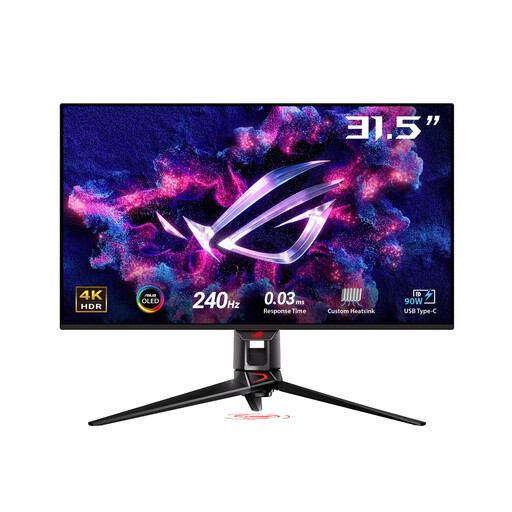
Why It Stands Out: The ASUS ROG Swift PG32UCDMZ is engineered for users who demand both top-tier gaming speed and professional-grade colour accuracy. Its standout feature is the extensive focus on OLED panel protection, incorporating a custom heatsink and graphene film for superior thermal management. With a factory-calibrated colour accuracy (Delta E < 2) and a powerful 90W USB-C Power Delivery port, it's a true hybrid monitor for content creation and gaming.
Pros:
- Third-generation 4K QD-OLED panel with a 240Hz refresh rate.
- Advanced cooling system with a custom heatsink to minimise burn-in risk.
- Professional-grade colour accuracy with 99% DCI-P3 coverage.
- Versatile connectivity including USB-C with 90W Power Delivery.
Who is it for?: The power user—be it a content creator, developer or hardcore gamer—who needs a single monitor that excels at both professional colour work and elite-level gaming.
Exploring Other Options? Consider an Ultrawide
While a 32-inch 16:9 display is a fantastic all-rounder, some gamers and productivity users prefer a wider field of view. If you're looking for a more expansive and immersive experience, especially for racing simulators or cinematic open-world games, it may be worth exploring other form factors.
For a more panoramic perspective, browse our curated selection of Ultrawide OLED monitor models.
Frequently Asked Questions
Is a 4K 240Hz QD-OLED monitor worth it for a PS5 or Xbox Series X? While current consoles are limited to 4K at 120Hz via HDMI 2.1, these monitors remain an excellent choice. You will still benefit from the superior image quality, per-pixel lighting and near-instantaneous response times of QD-OLED technology. It also ensures your display is future-proof for any potential mid-generation console refreshes or for when you connect a high-end PC.
What kind of PC hardware is needed to run games at 4K 240Hz? Achieving a stable 240 frames per second at 4K resolution is extremely demanding. It requires a top-of-the-line system, typically featuring a flagship graphics card (such as an NVIDIA RTX 50-series or AMD's equivalent) and a high-end CPU to avoid bottlenecks. You will also need to use a DisplayPort 1.4 cable to enable the necessary bandwidth via Display Stream Compression (DSC).
How do modern QD-OLED monitors handle the risk of burn-in? Current-generation QD-OLED monitors incorporate multiple layers of protection. These include passive cooling solutions like custom heatsinks to dissipate heat, as well as active software features. Common functions include Pixel Orbiting (which subtly shifts the image), automatic dimming of static logos and scheduled Pixel Refresh cycles that run when the monitor is in standby to maintain panel health.